
Cherish
Chairest
Domestic interiors are not passive environments, but systems that organize how bodies are expected to move through and navigate space. This interior space produces categories of ‘proper use’, ‘proper objects’, and ‘proper bodies’. Domestic interiors organize objects in ways that produce and maintain social legibility. Furniture doesn’t support the body; it helps structure how bodies are meant to appear within space. Chairs are not only functional objects, but instruments that help choreograph domestic order. Upholstered chairs, signifying softness while enforcing a specific mode of bodily comportment, uprightness, stillness, restraint. This is where I play best. I live in the cotton batting, slippery piping, and worn woven threads. My chairs disrupt this logic of domestic legibility. They still hold the recognizable language of upholstery, without consistently supporting the behaviors those forms imply. A chair that appears padded doesn’t guarantee comfort.
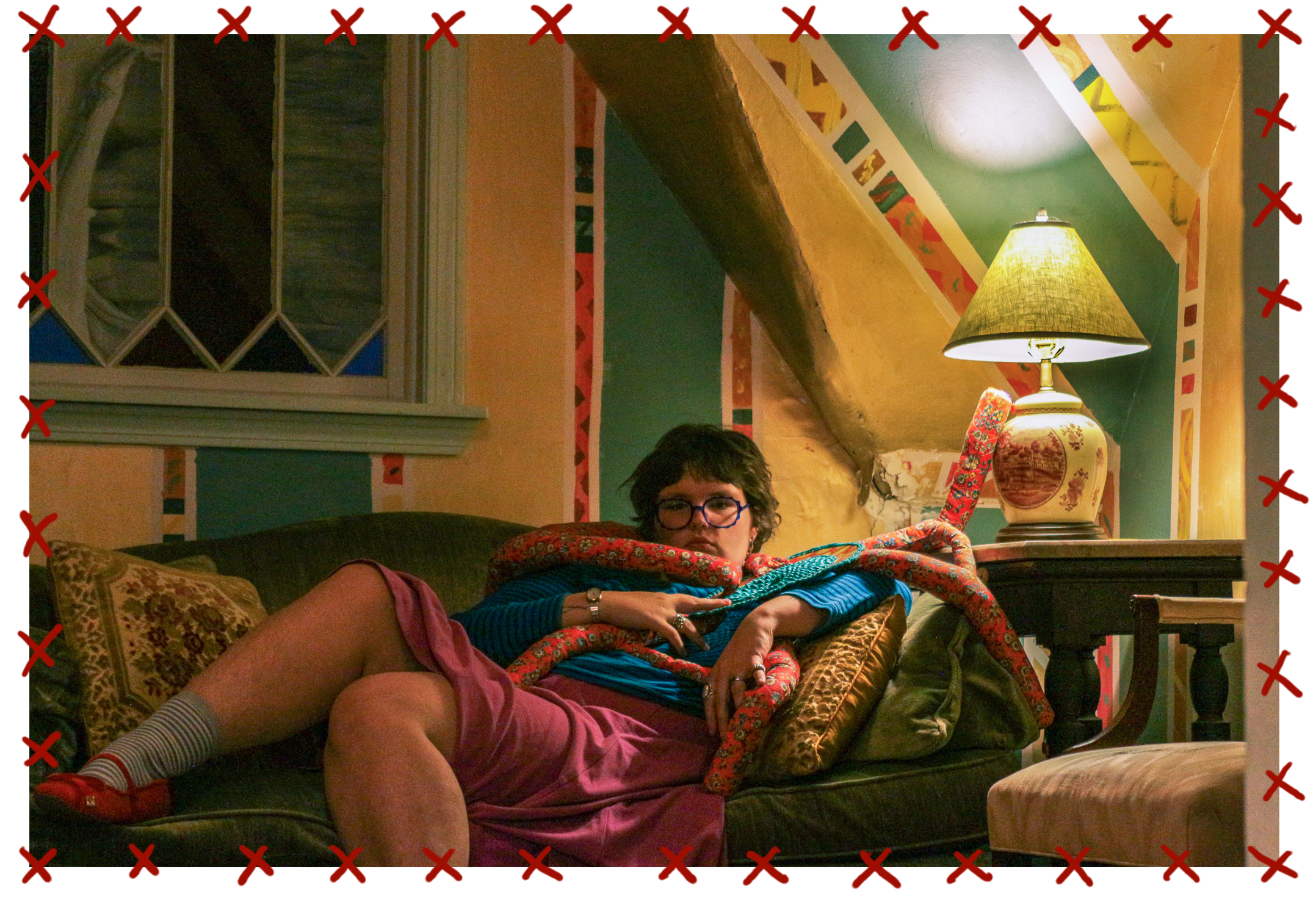
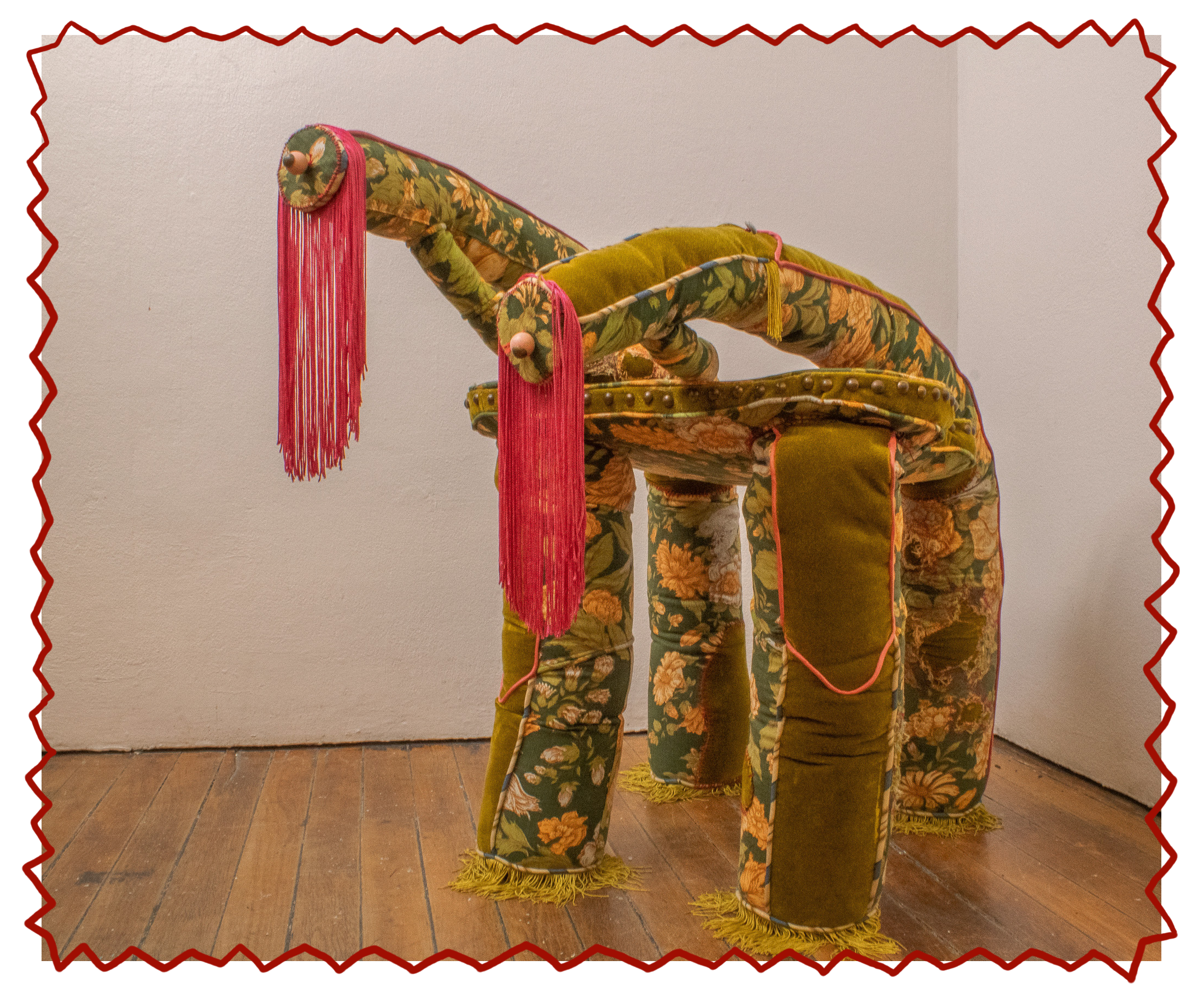
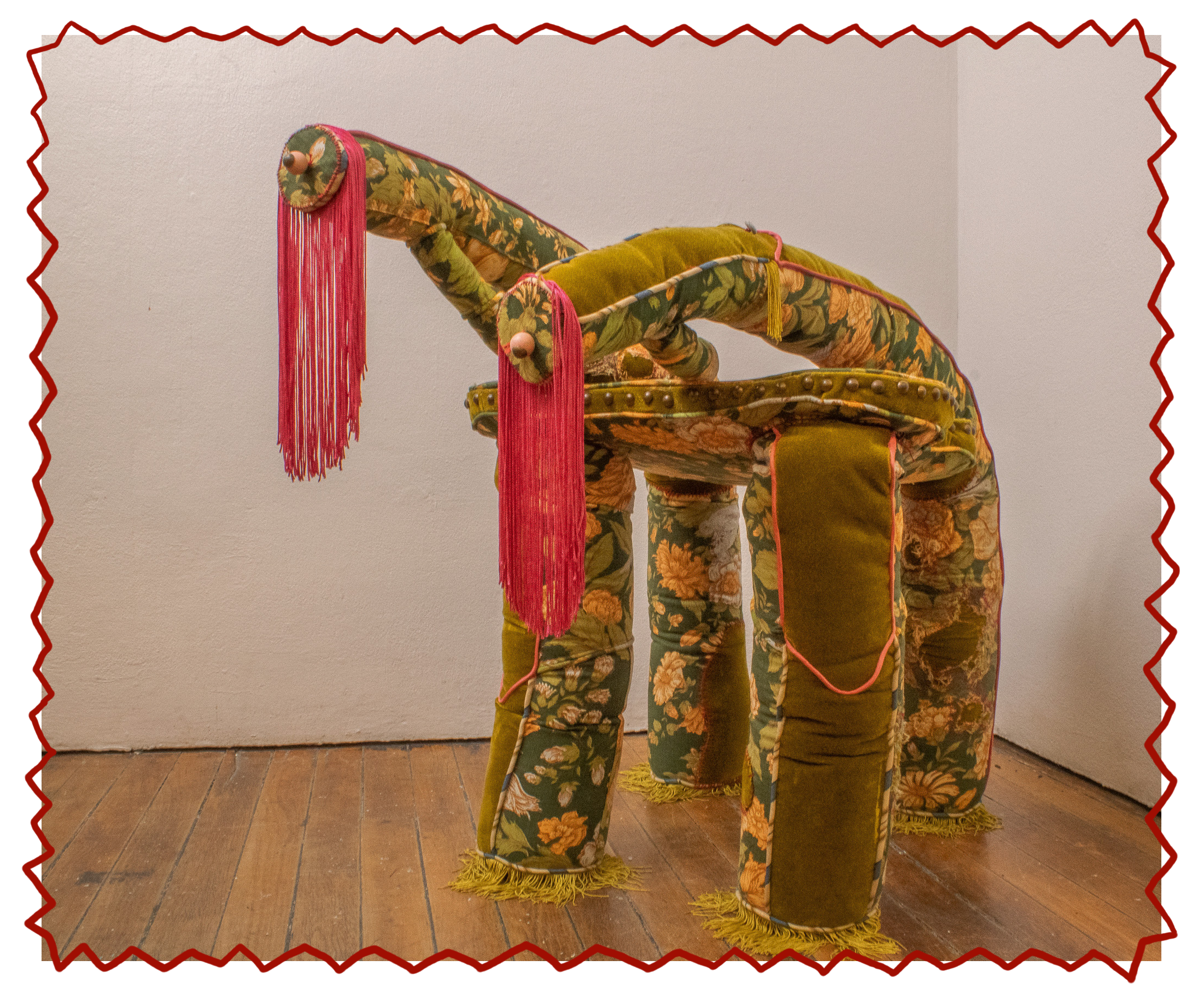
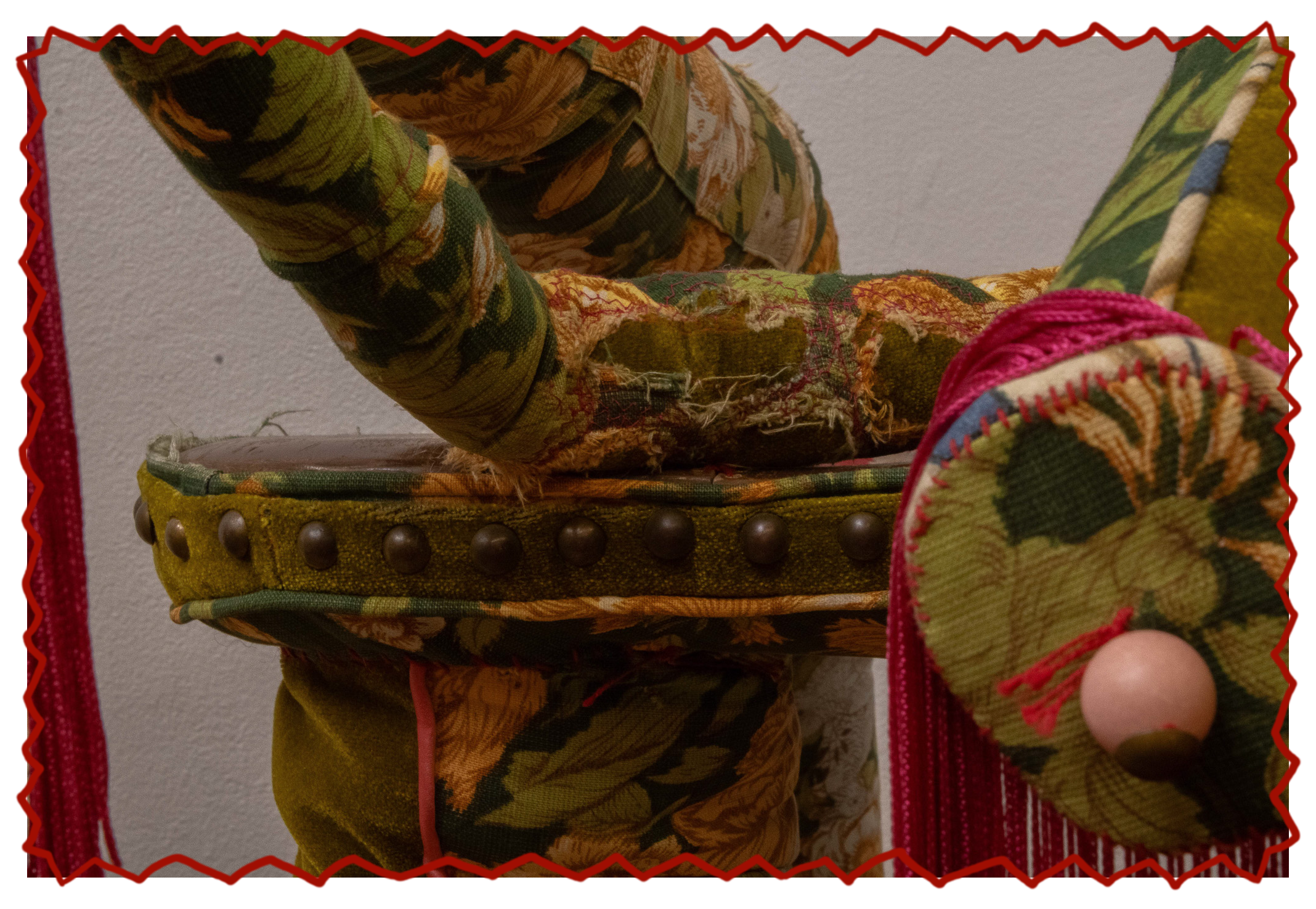
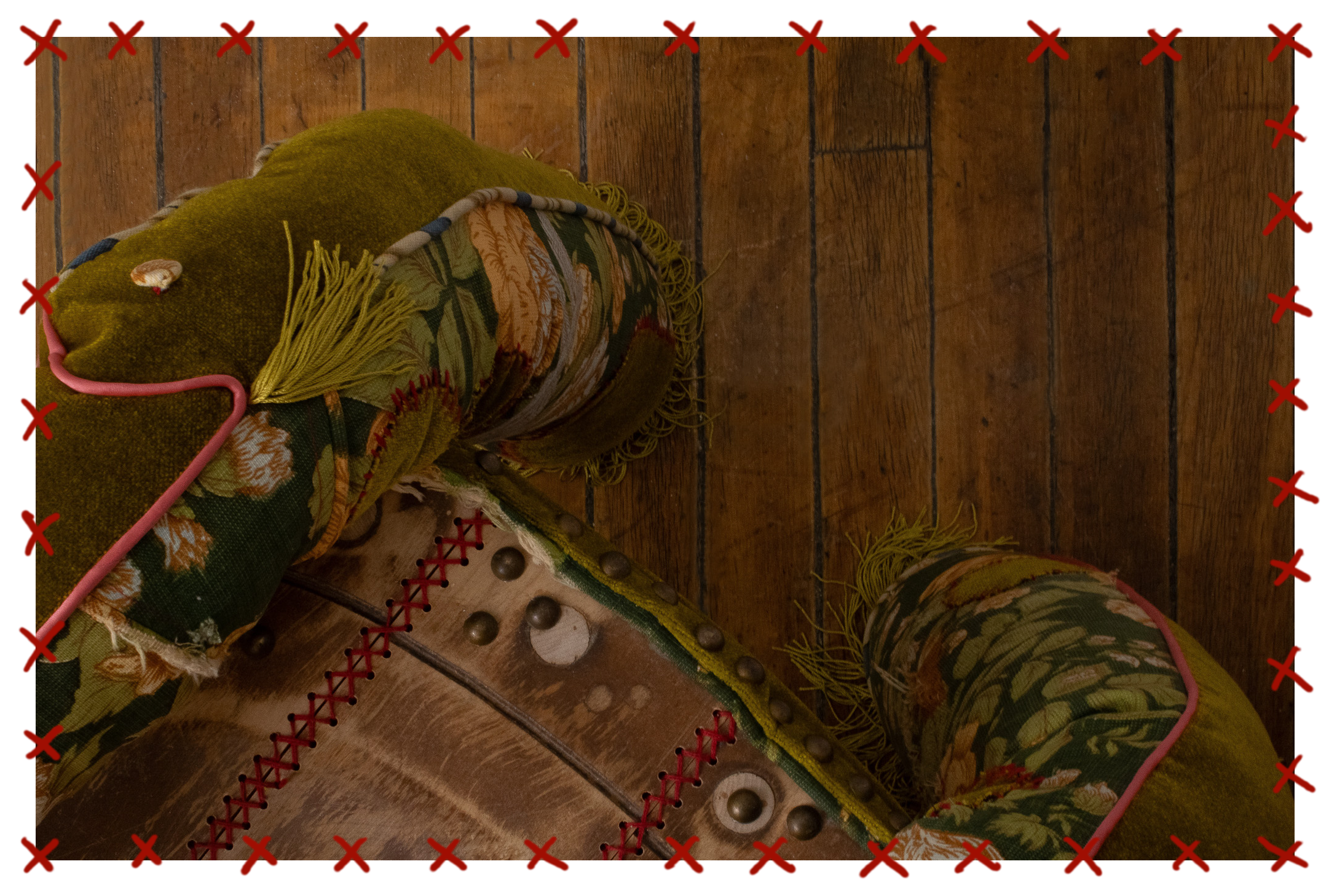
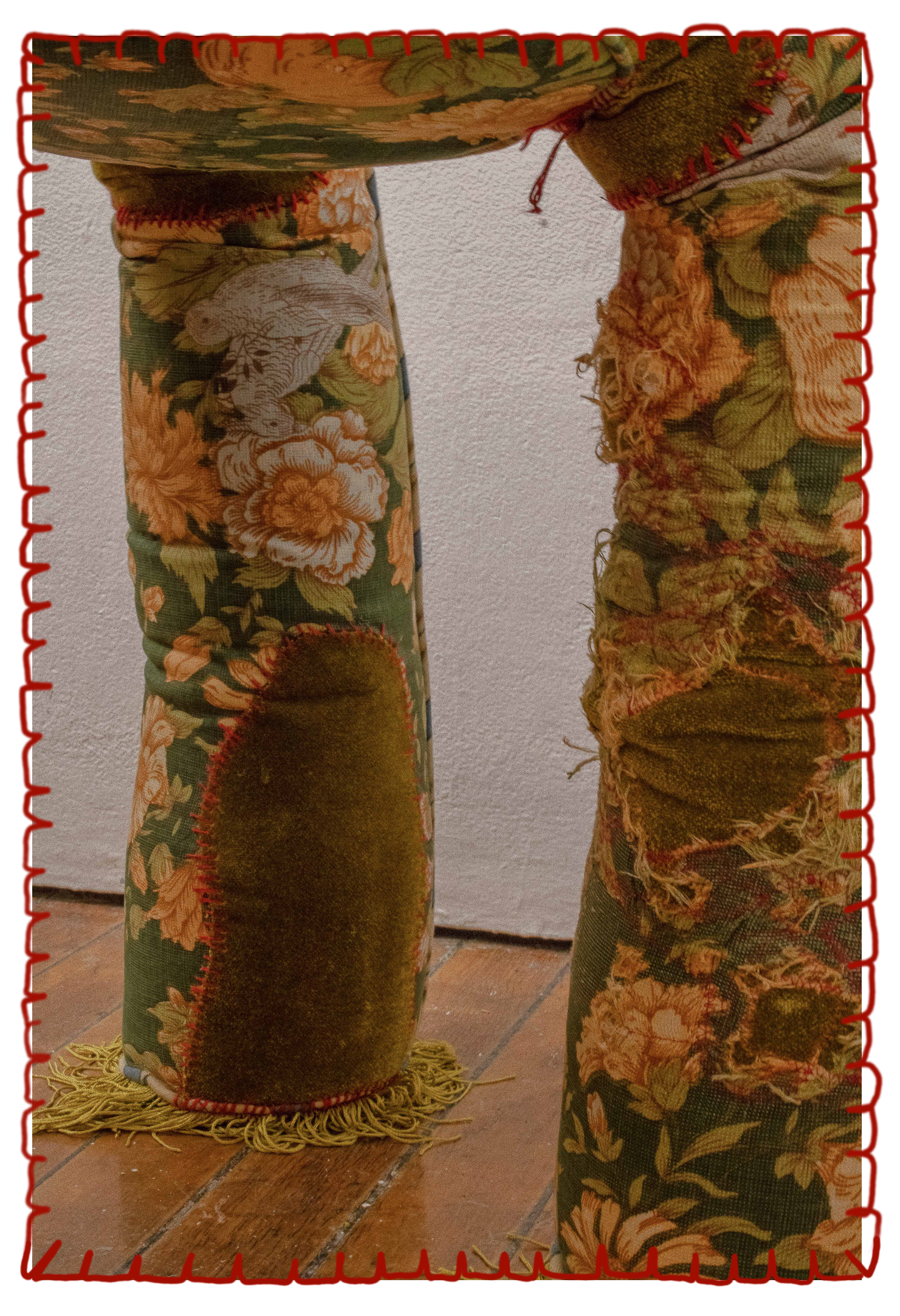
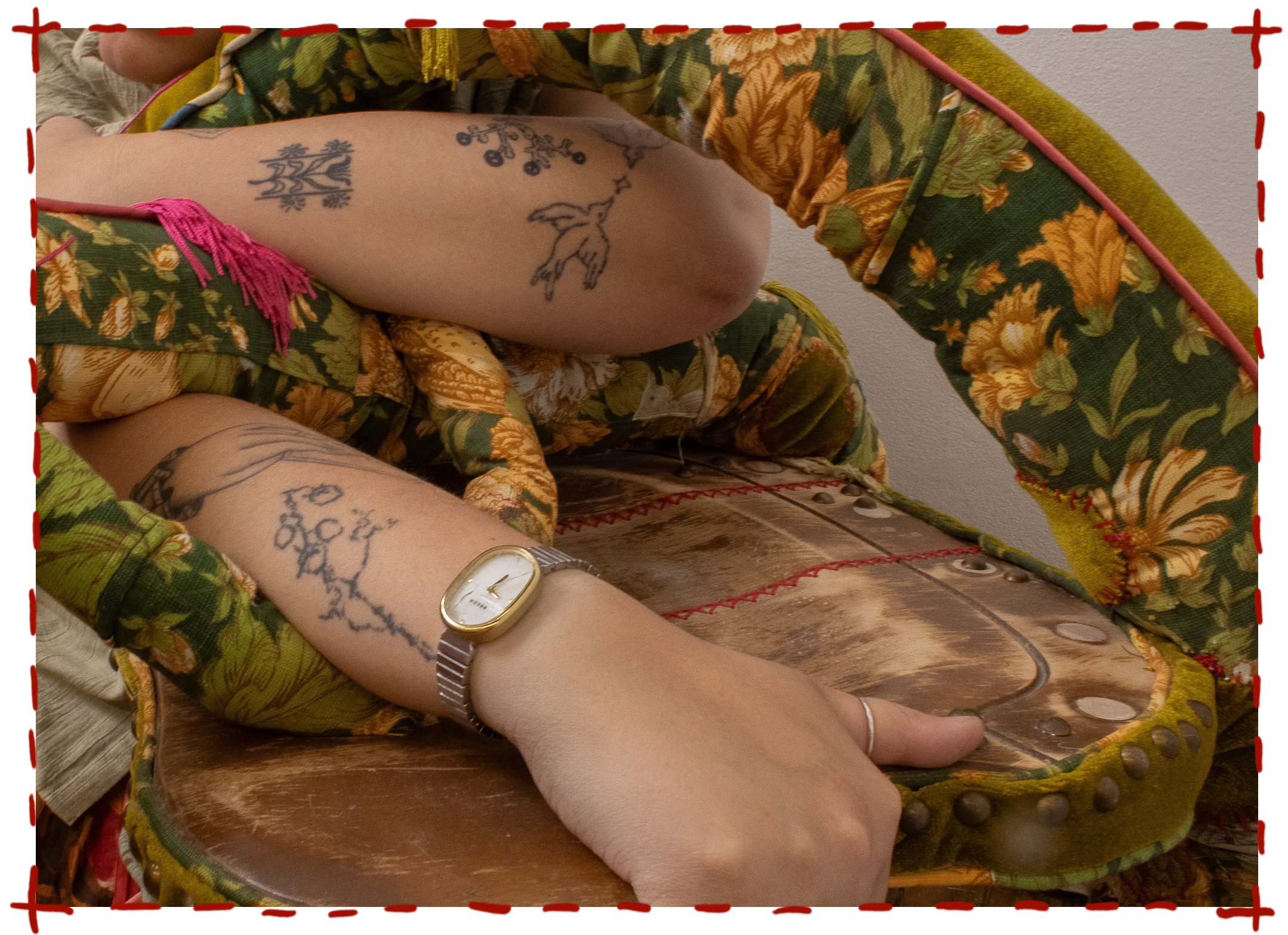
Chairest’s wooden seat is fractured but still joined; stitching exposes labor instead of hiding it. Frayed upholstery is obsessively stitched back into itself, framing the past life it lived. When you lower your personal seat to meet Chairest’s familiar wooden one, their legs twist and slither under your weight, plopping you unexpectedly on the sturdiness of the ground beneath. The performance of furniture is disrupted from within the material itself. They require adjustment, hesitation, and negotiation. Chairest cannot perform the roles assigned to it. Its functionality fails without that consistency, breaking down order and its understandability. In this sense, domestic space is destabilized through objects that refuse to consistently perform their assigned roles. The chair no longer guarantees the behavior it once helped choreograph.
Chairer
Their insides are hidden systems of springs, ripe webbing, pulpy stuffing, and tacks, concealed beneath their decorative fabric. The chair presents a smooth exterior; when dismantled, inner parts resemble cross-sections of flesh. The stitches don’t restore structural integrity; they become visible mending. To work with chair as material is to undo its final form, to break it into fragments and reveal the historied choices that first made it recognizable as furniture. We share thoughts, materials, skills, and wisdom, with words or in couched negotiations between previous makers and me. Queer bodies move through and orient themselves in spaces, insincere kindness in Midwestern domestic interiors that were never built with us in mind. Forcing constant adjustment, repositioning, perching, making do. A leg suggests support, not guaranteeing it. Upholstery signals comfort without offering it in a reliable way. The distinction between object and thing within my work is held in suspension.
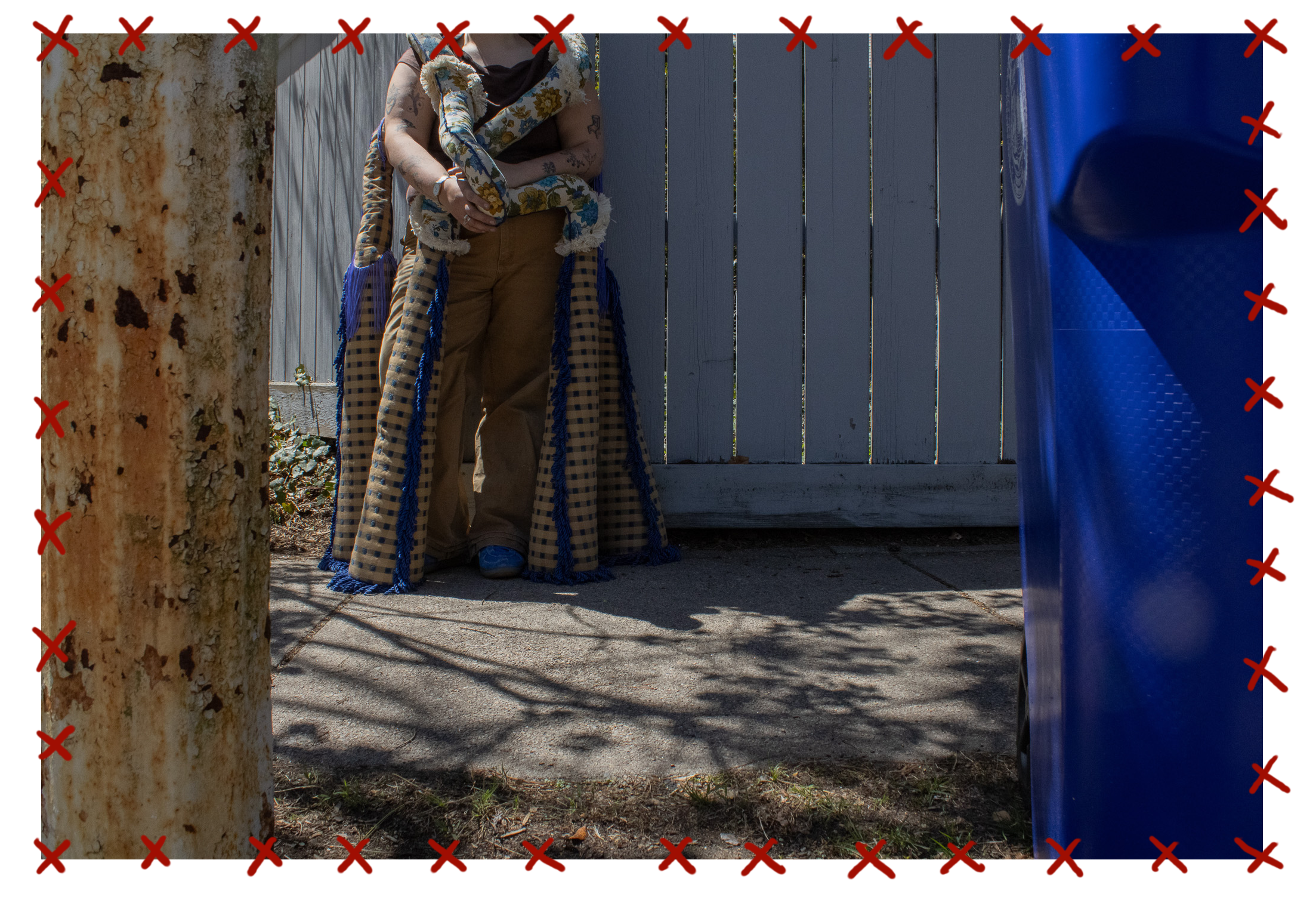
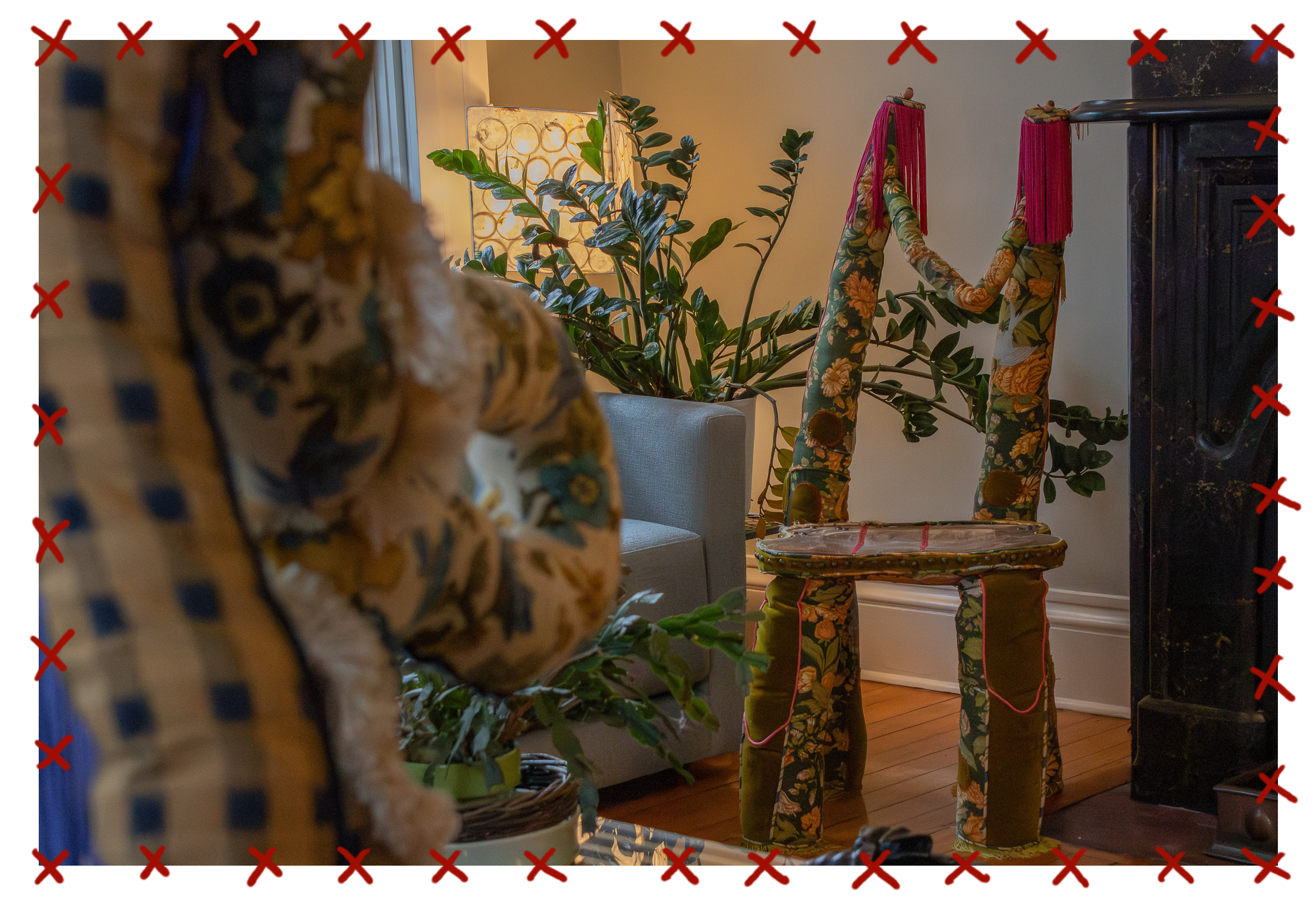
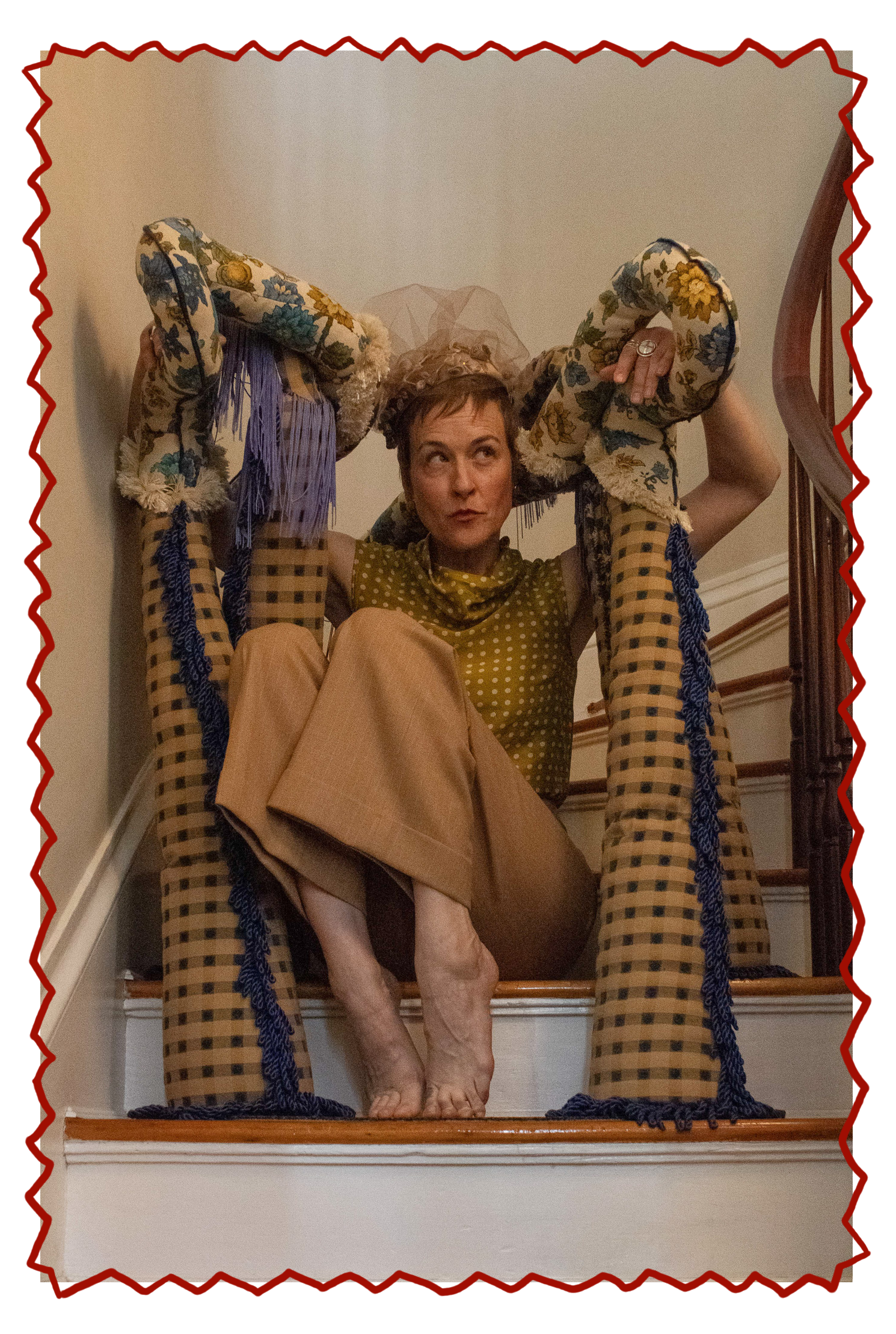
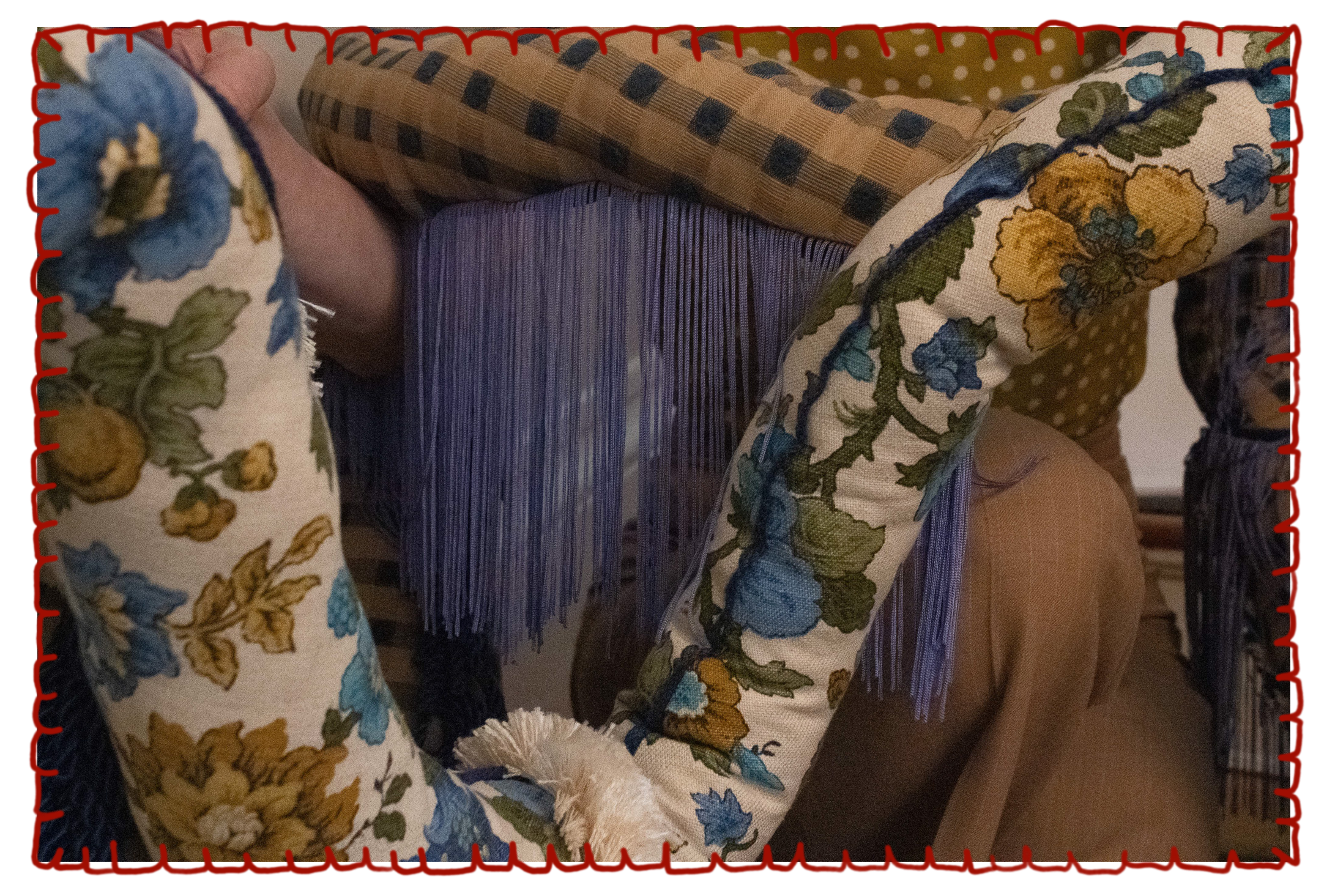
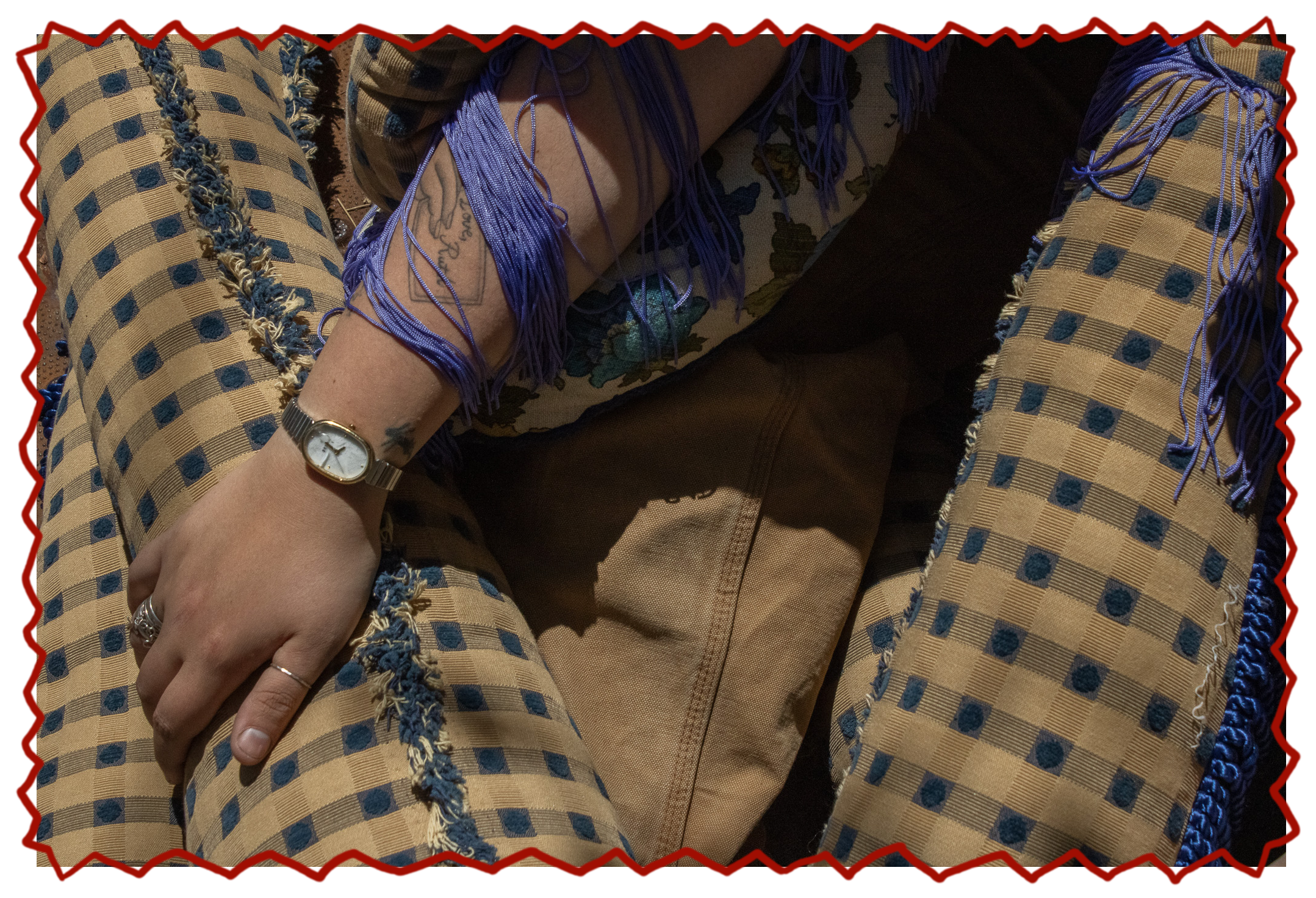
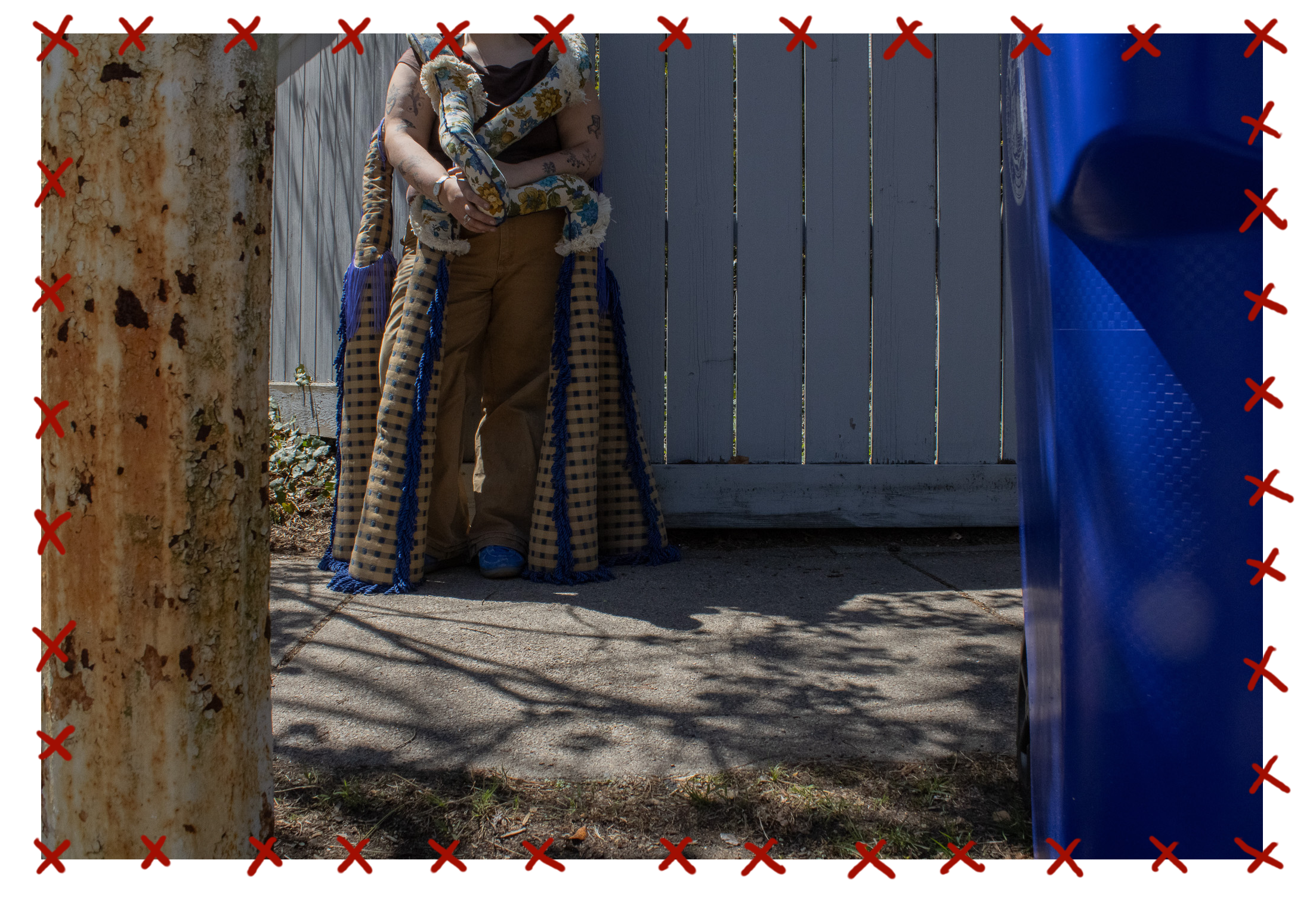
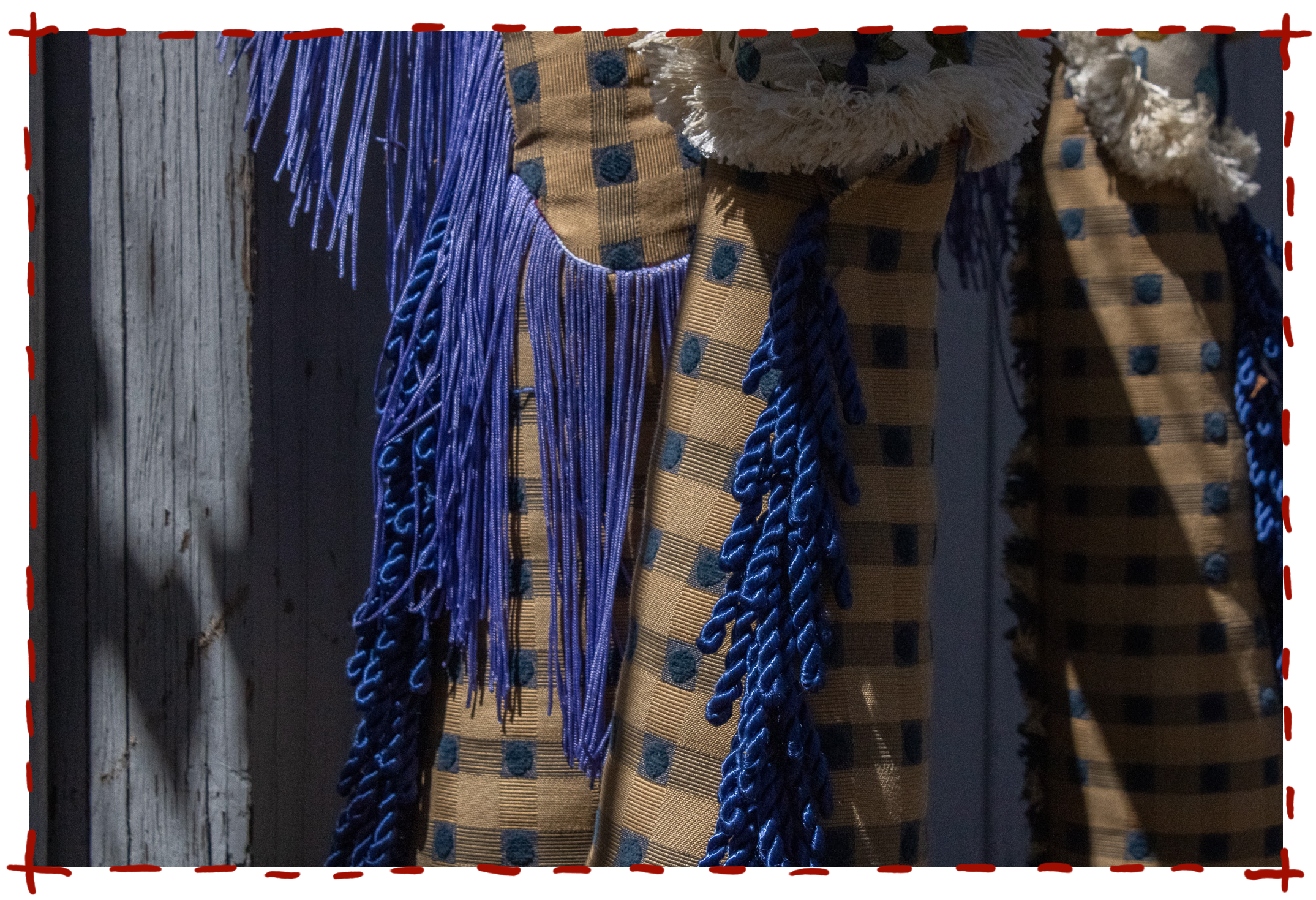
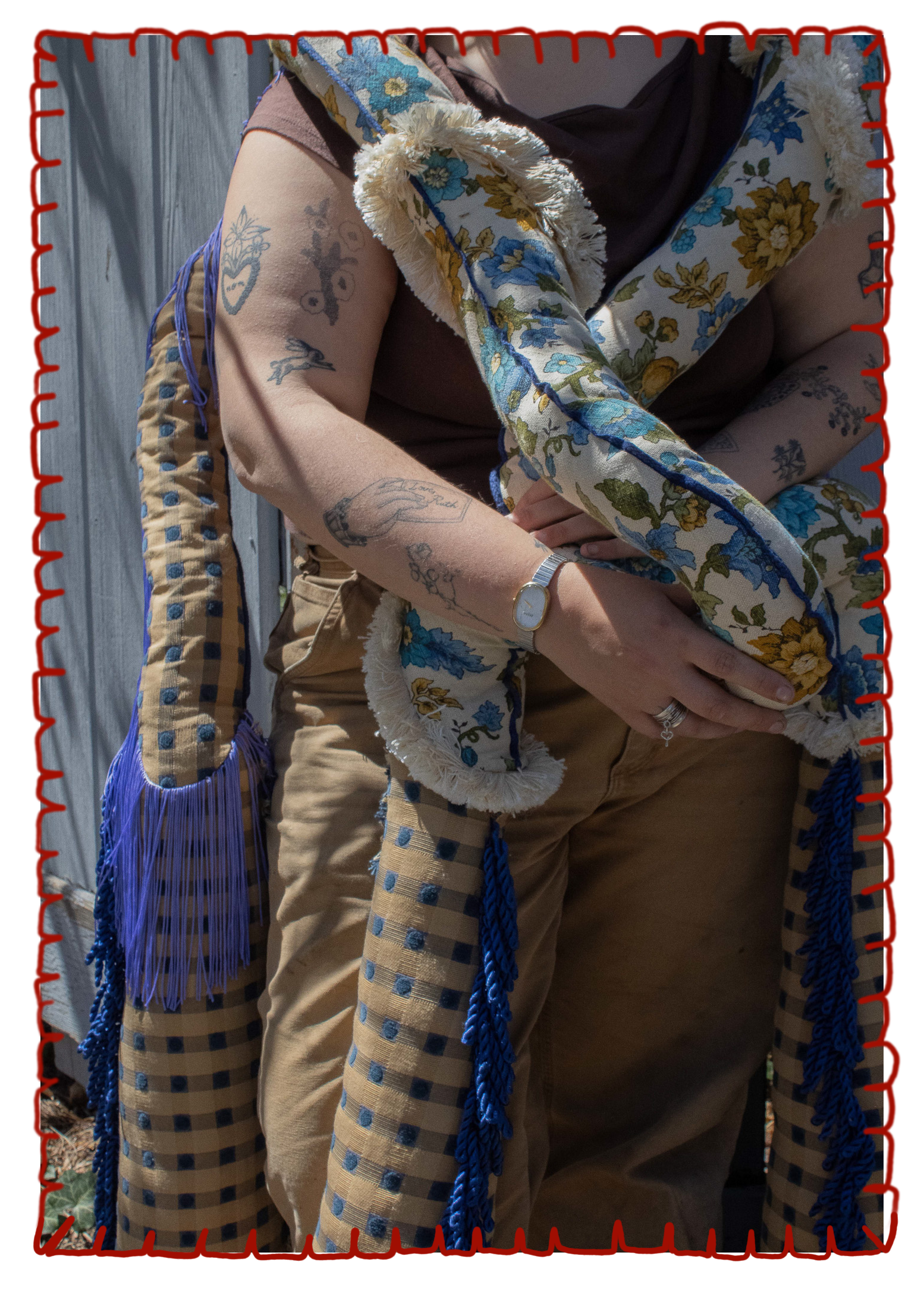
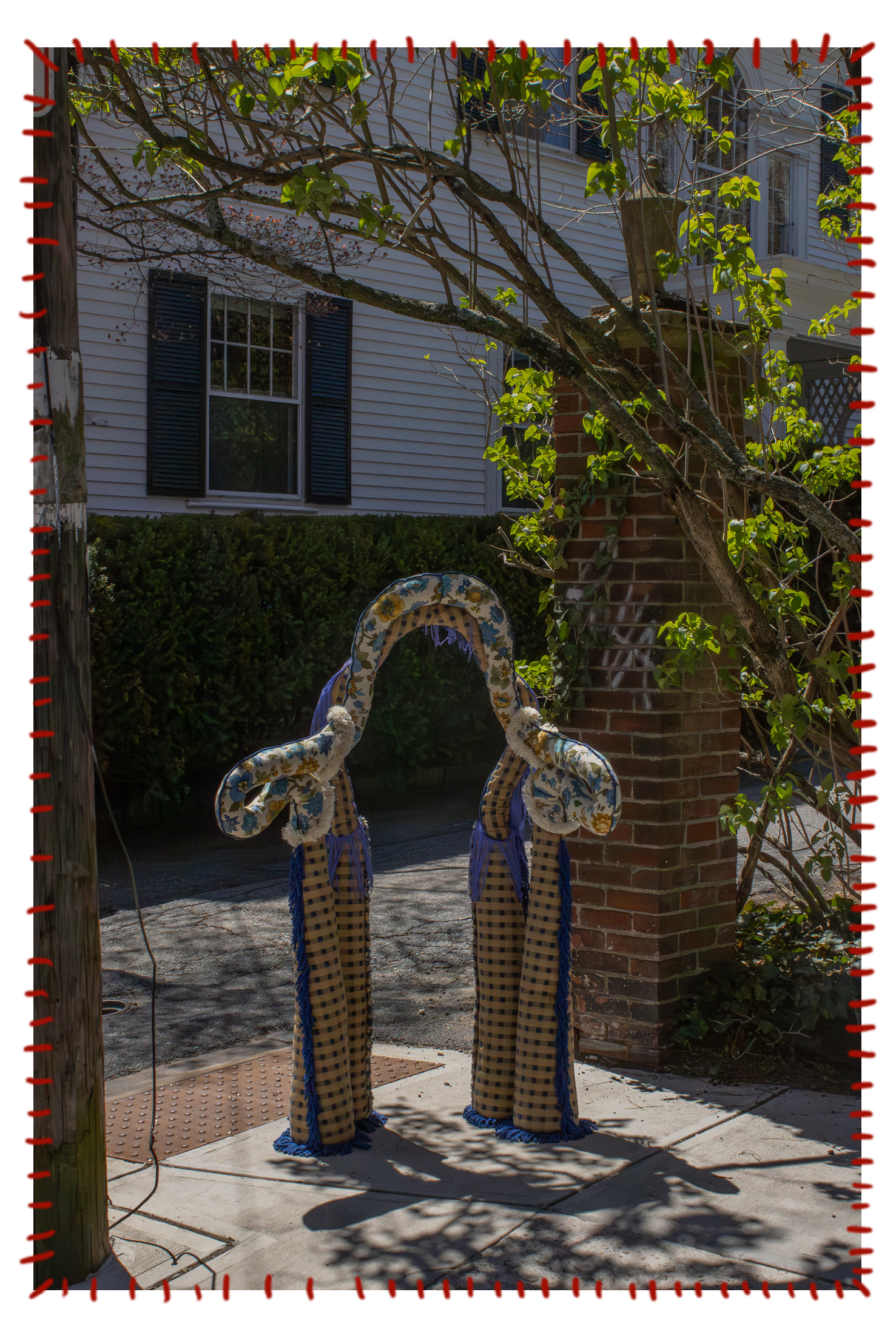
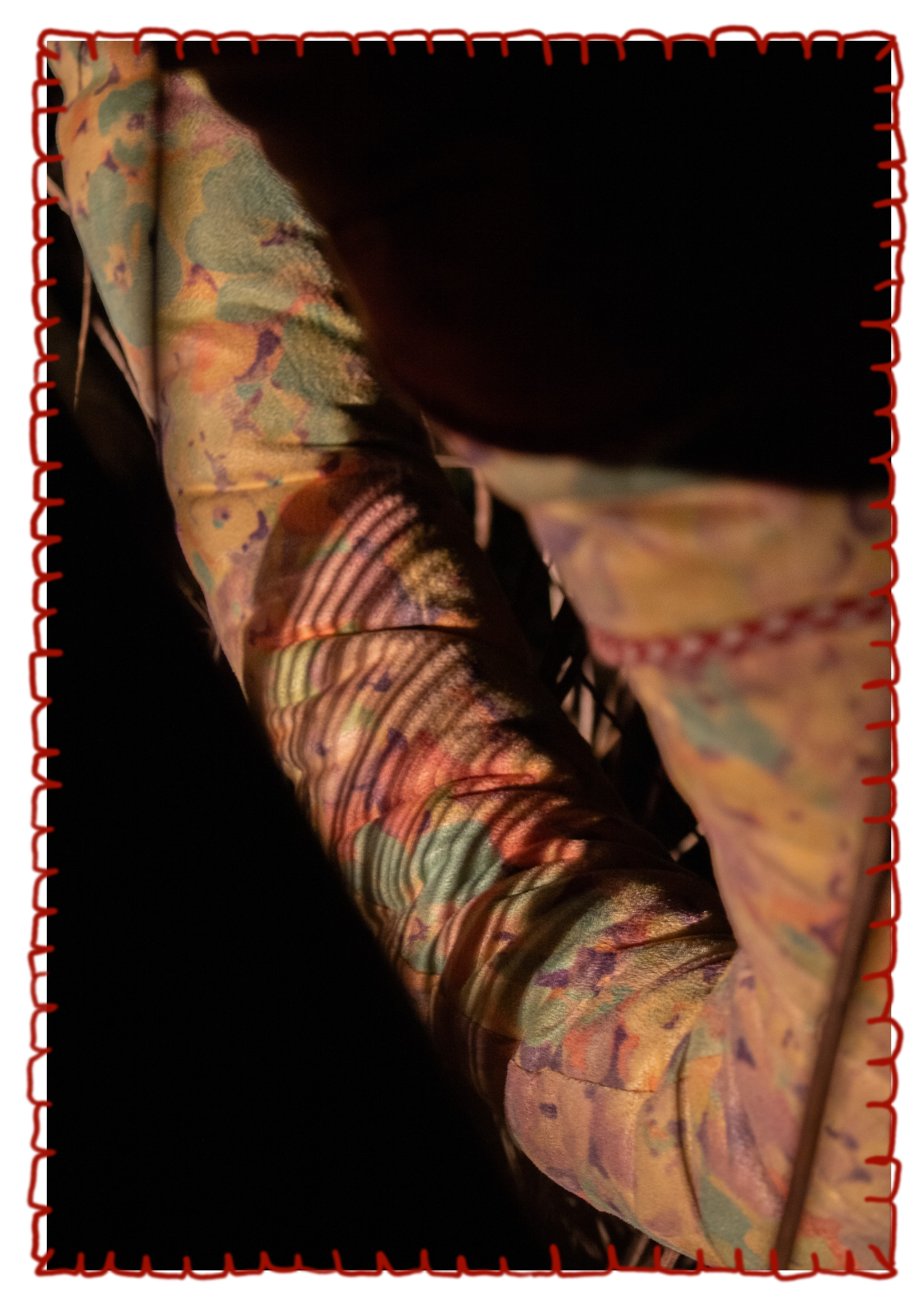
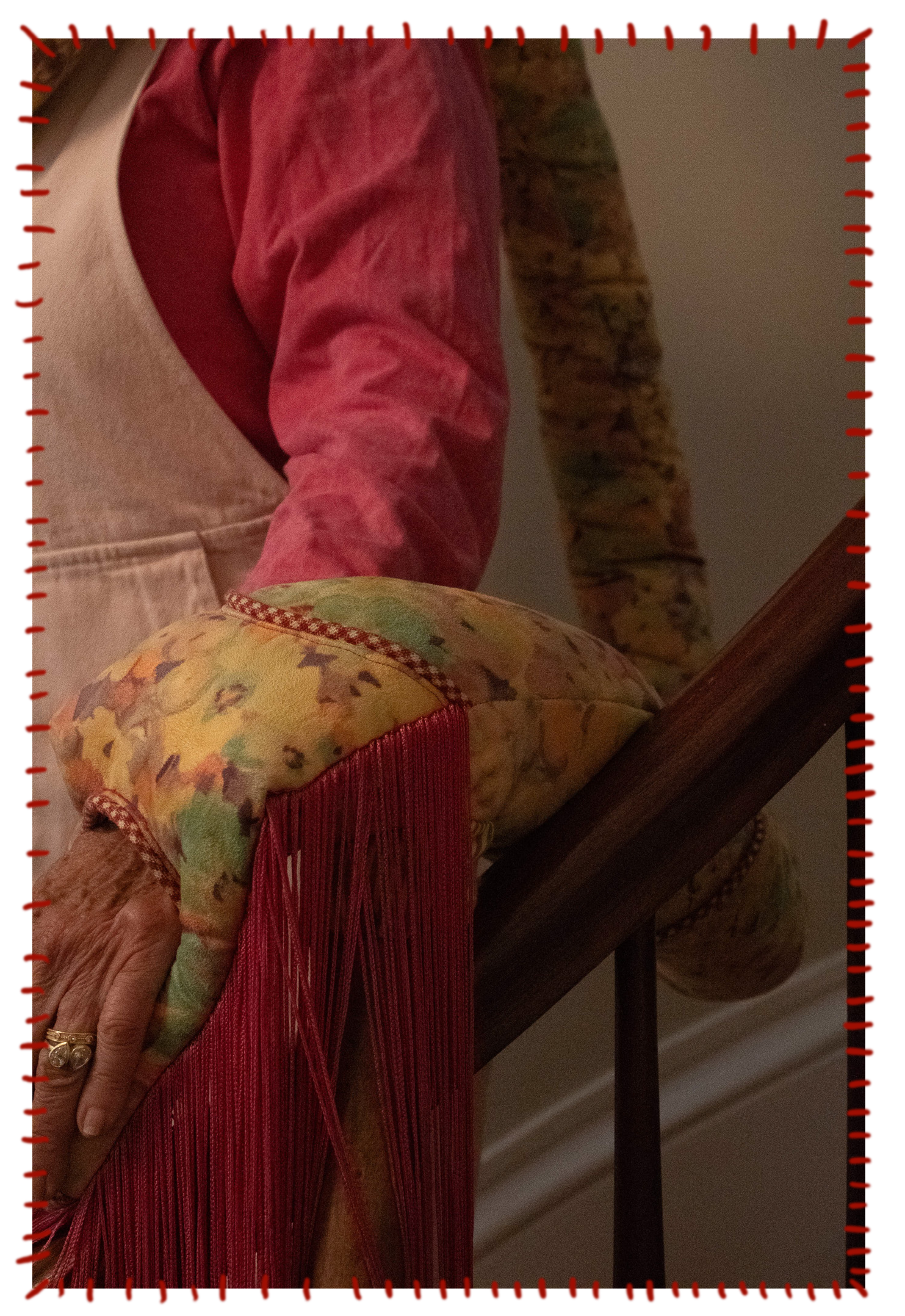
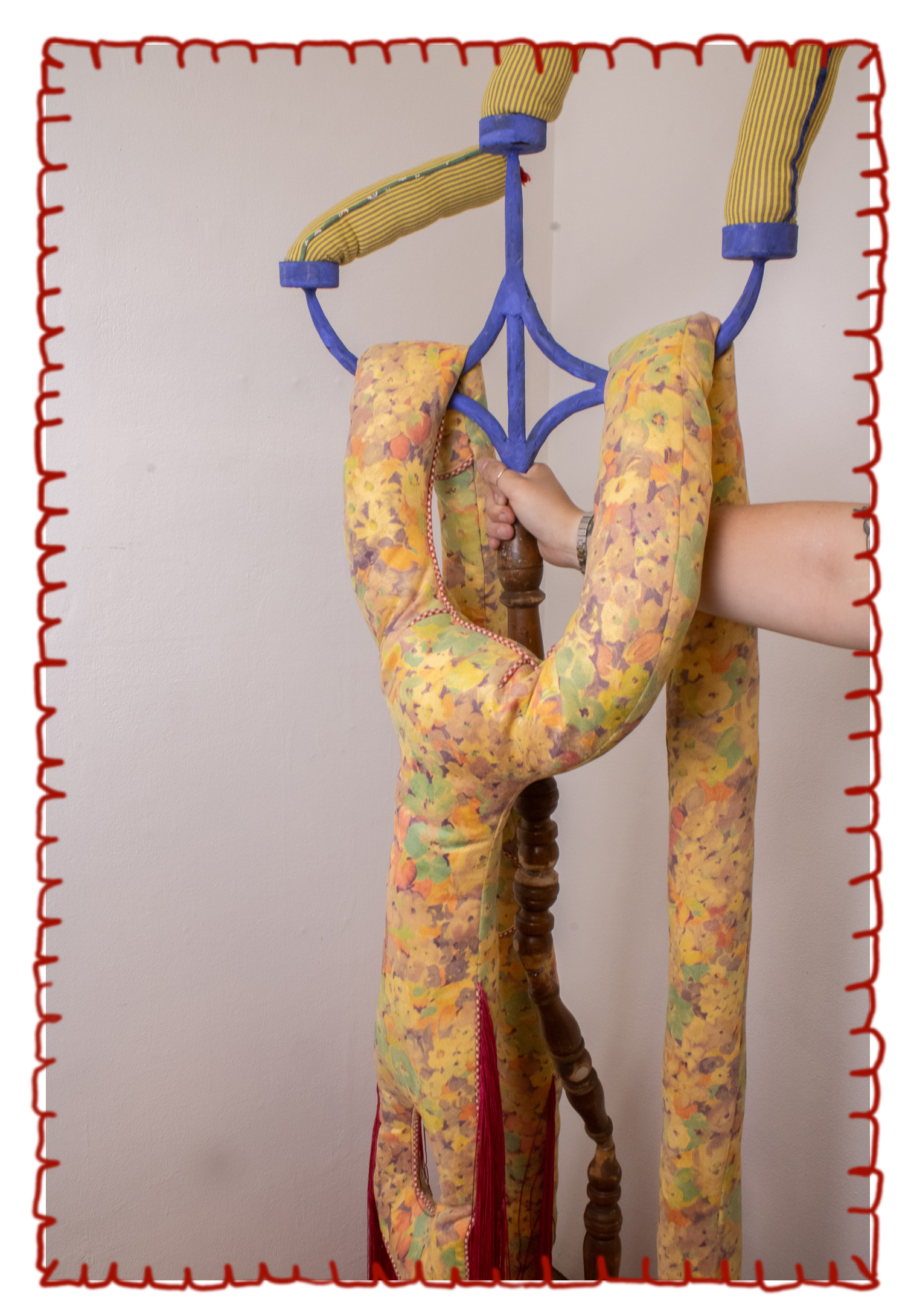
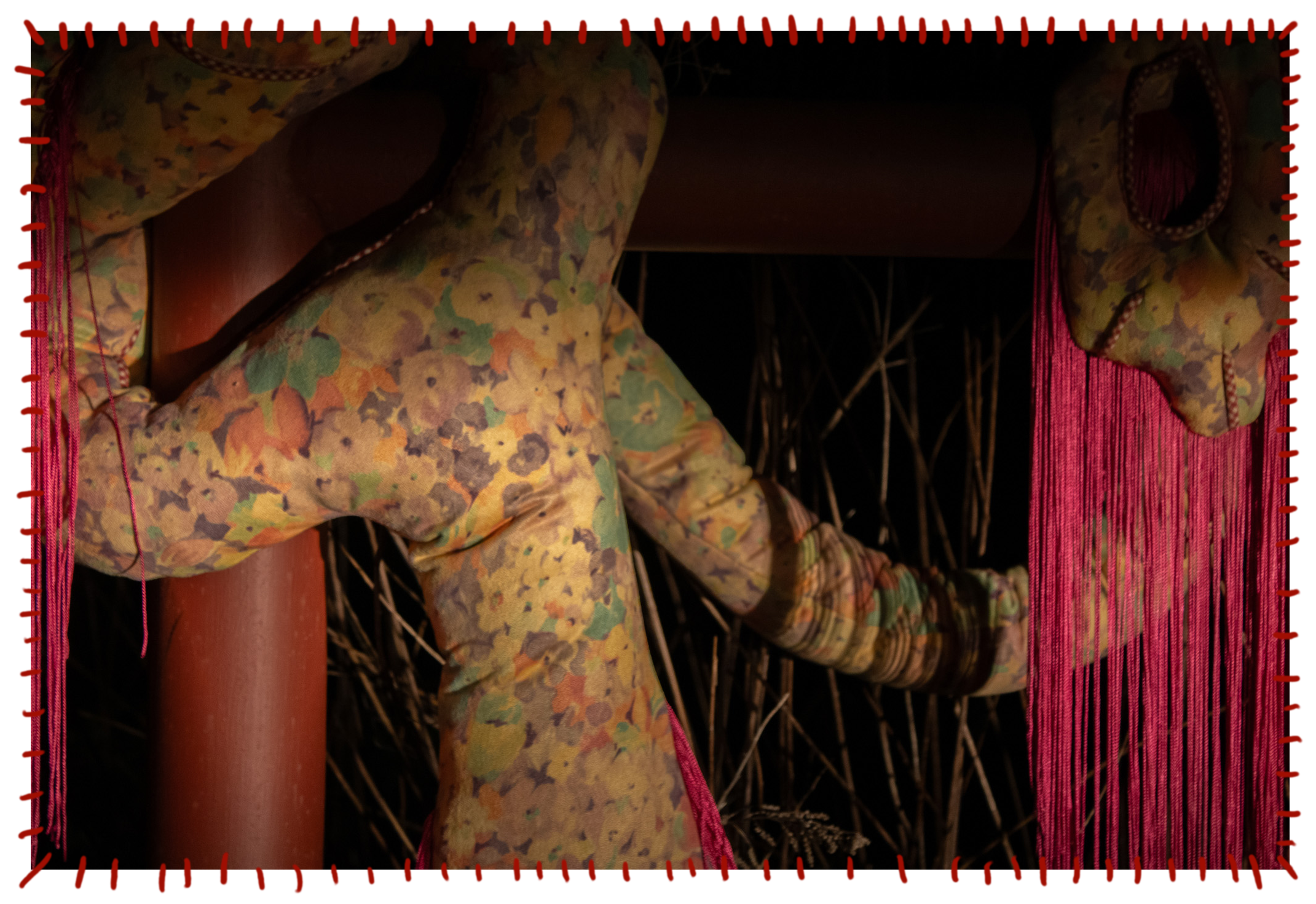
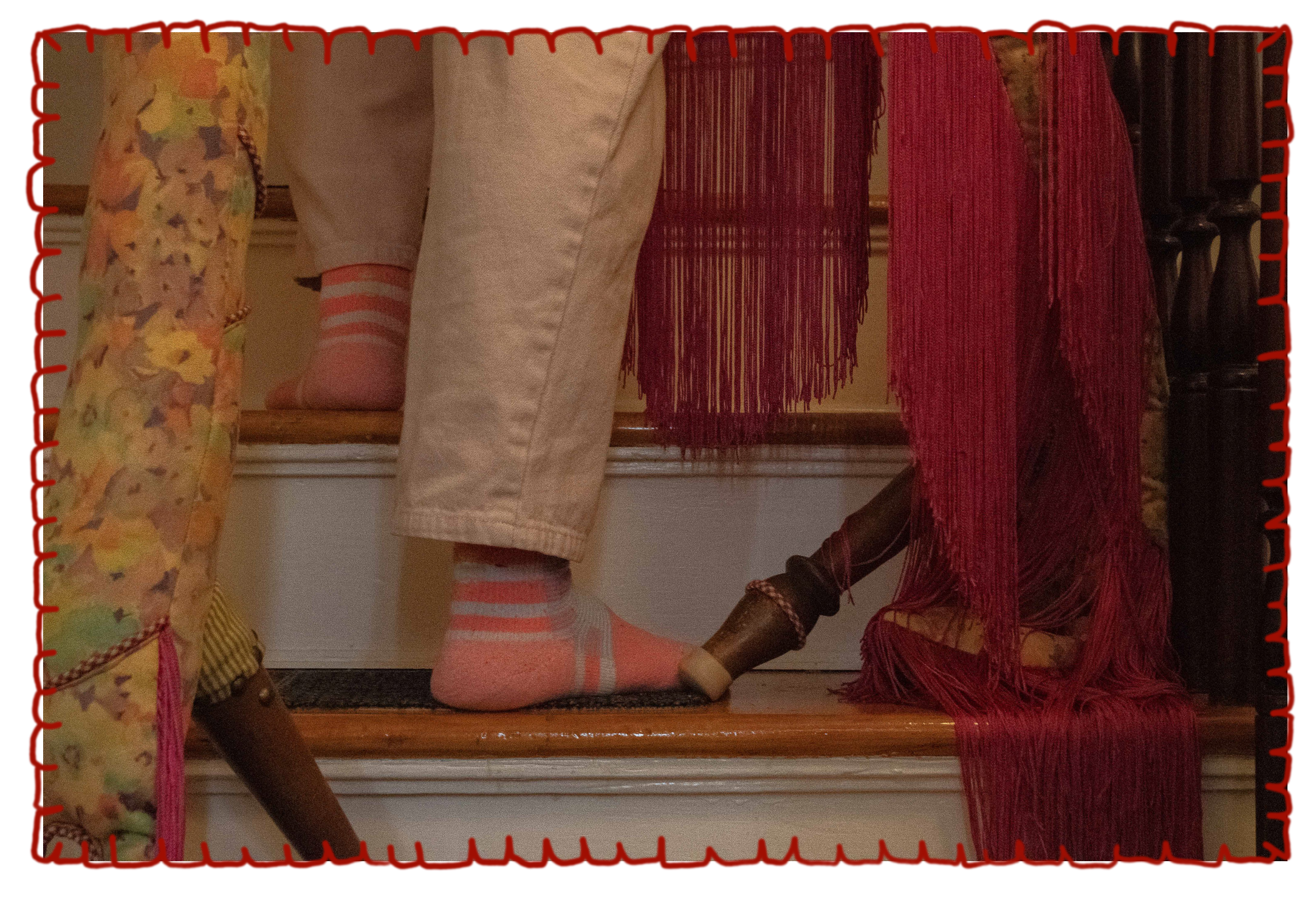
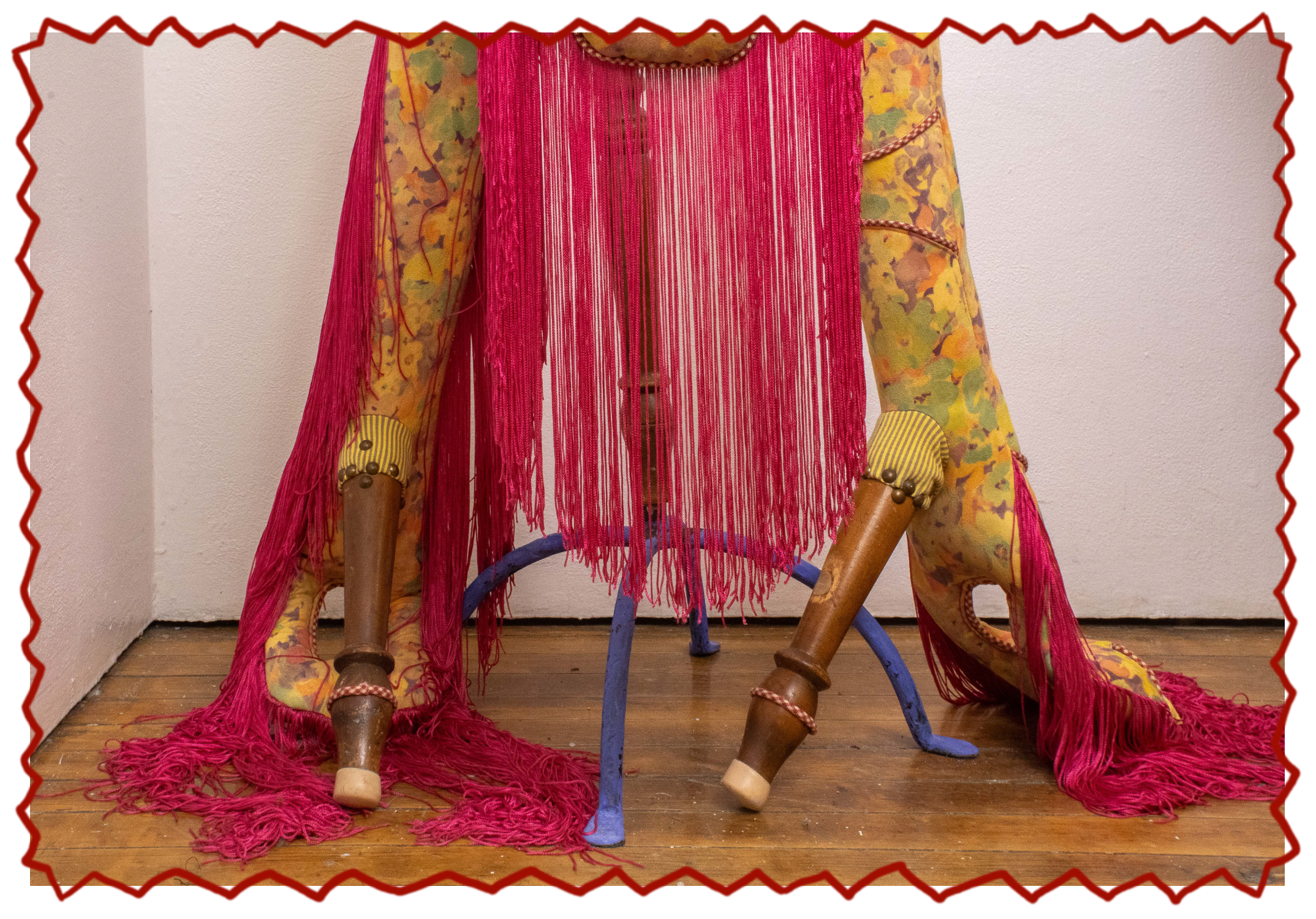
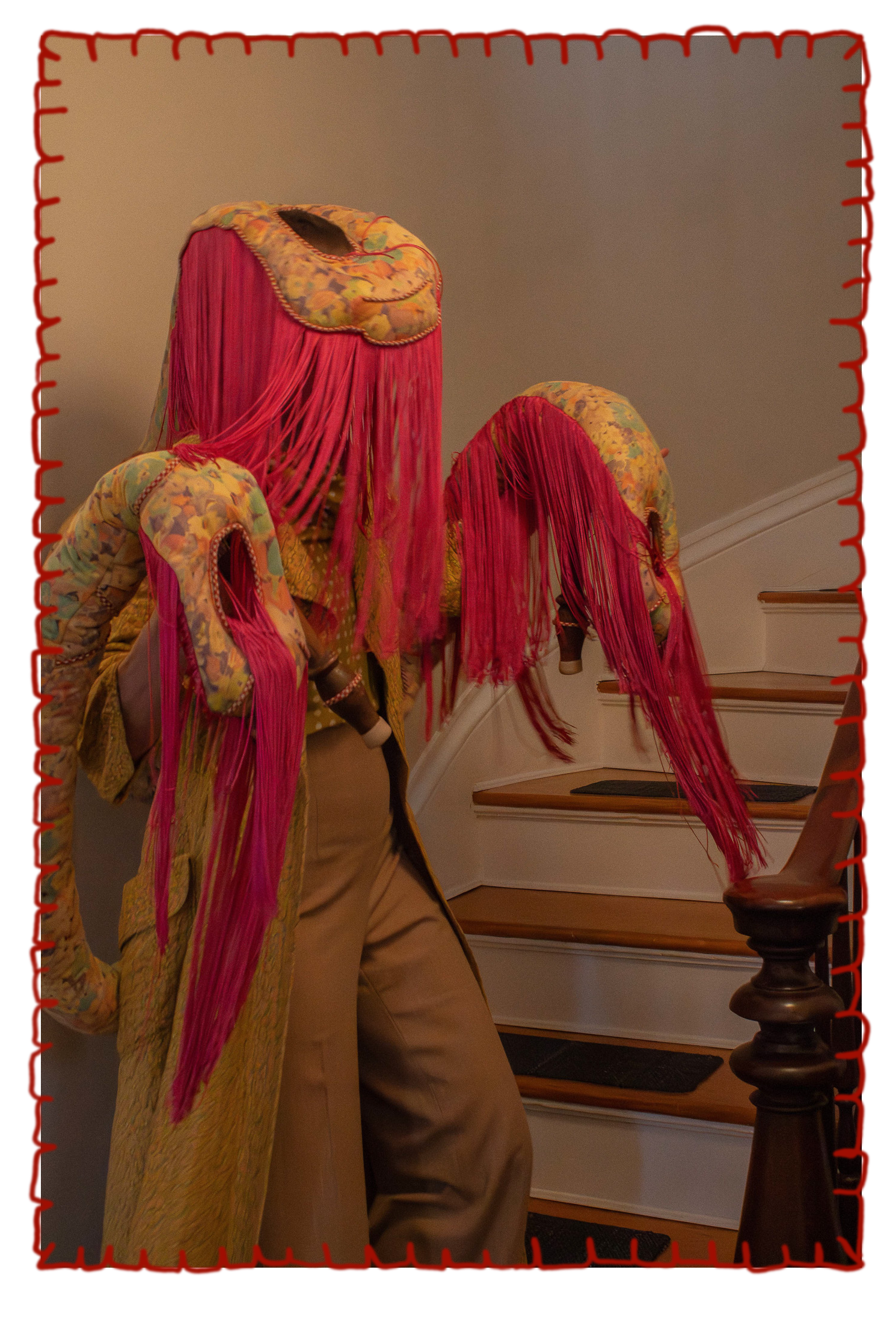
A body approaches Chairer, standing tall with some structural integrity, the seatless center interrupts its readability & understanding. It holds a vertical posture, denying the horizontal rest it suggests. The worn piping lines its seams, & unruly fringe accentuates its joinery. Its silky twisted trim toes soften the transition from weighted gingham legs to the smooth hardwood floor it rests on. producing a condition where viewer recognizes ‘chairness’ without being able to inhabit it fully in the accustomed ways we interact with objects or furniture. Recognition persists, function does not follow. Objects are never fully accessible to human understanding, & no single mode of perception exhausts what an object is. In this sense, my chairs cannot be settled into a stable identity, never fully available to any single interpretation, functional, aesthetic, or symbolic. My chairs don’t allow us to “imagine the chair fully”; they are kept in a state where comprehension is always partial.
Chairing
The act of mending operates beyond the use of soft materials, extending into the structural logic of the chair itself. Carpentry, often understood as a practice of making structures appear seamless, joining parts so completely that the act of joining disappears into function. Fastening separate parts together to form a body, not just constructing a functional object. Joining is framed as embodiment, creating structures that can hold weight, be dragged, and plopped down, shifting the framing from carpentry as utility. The body of the chair is rarely seamless, often overbuilt or slightly misaligned. The joins do not disappear. The exposed joints function like pressure points, revealing the interior life of a domestic object. The stability of a chair depends on the same kind of ongoing adjustment that shapes how bodies move through space. What emerges is not simply a functional form, but a companion body whose stability depends on the same negotiations that sustain our own.
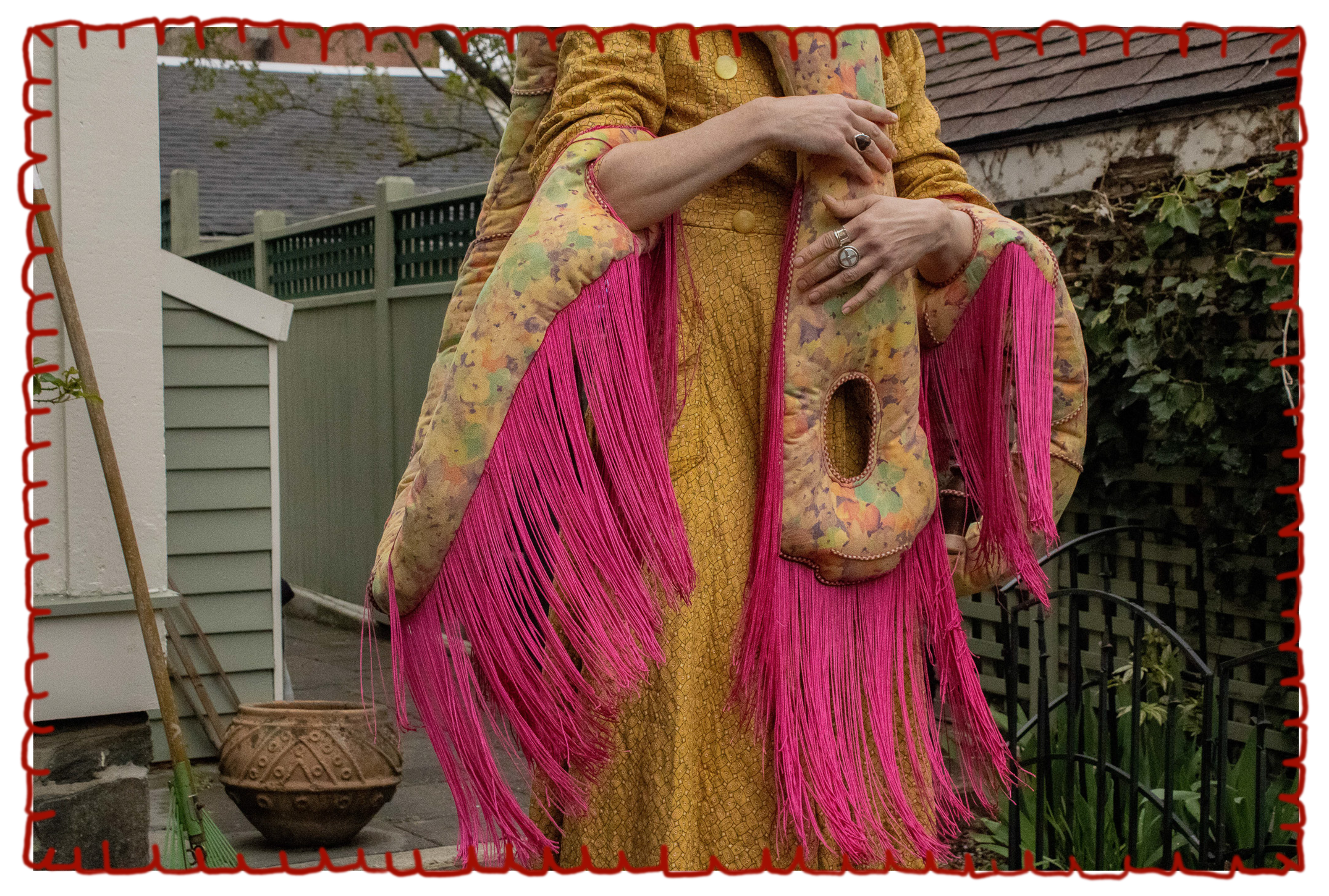
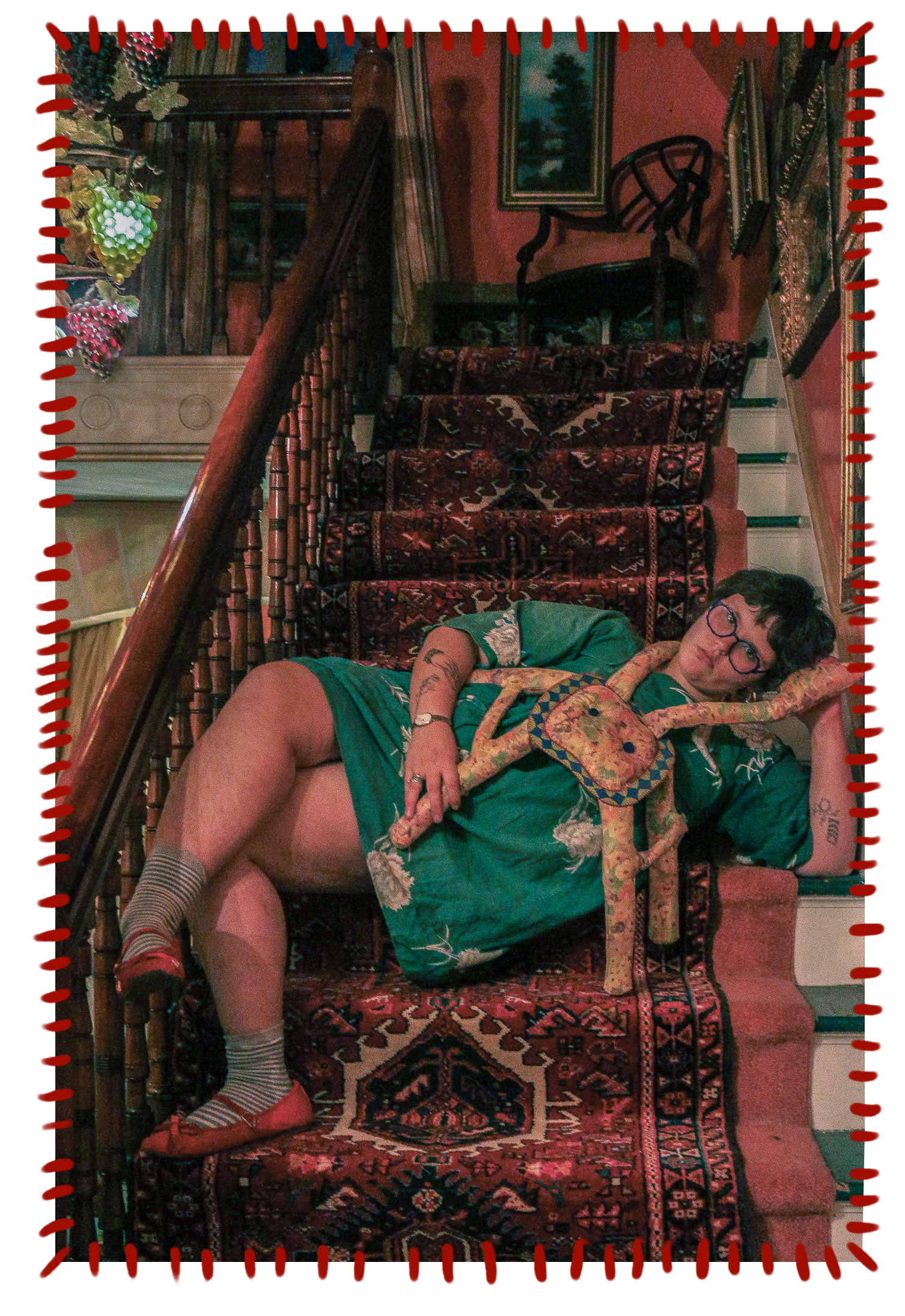
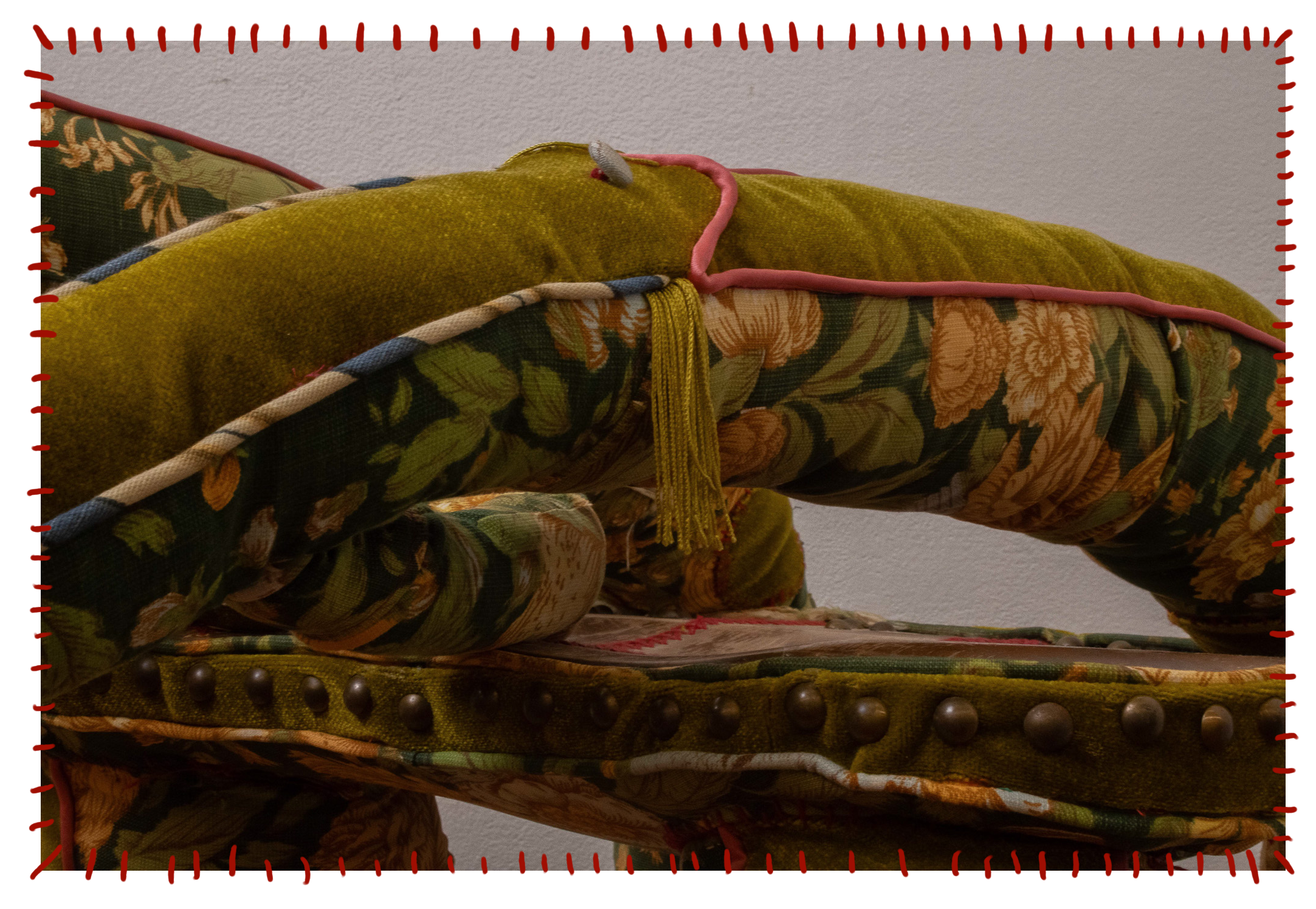
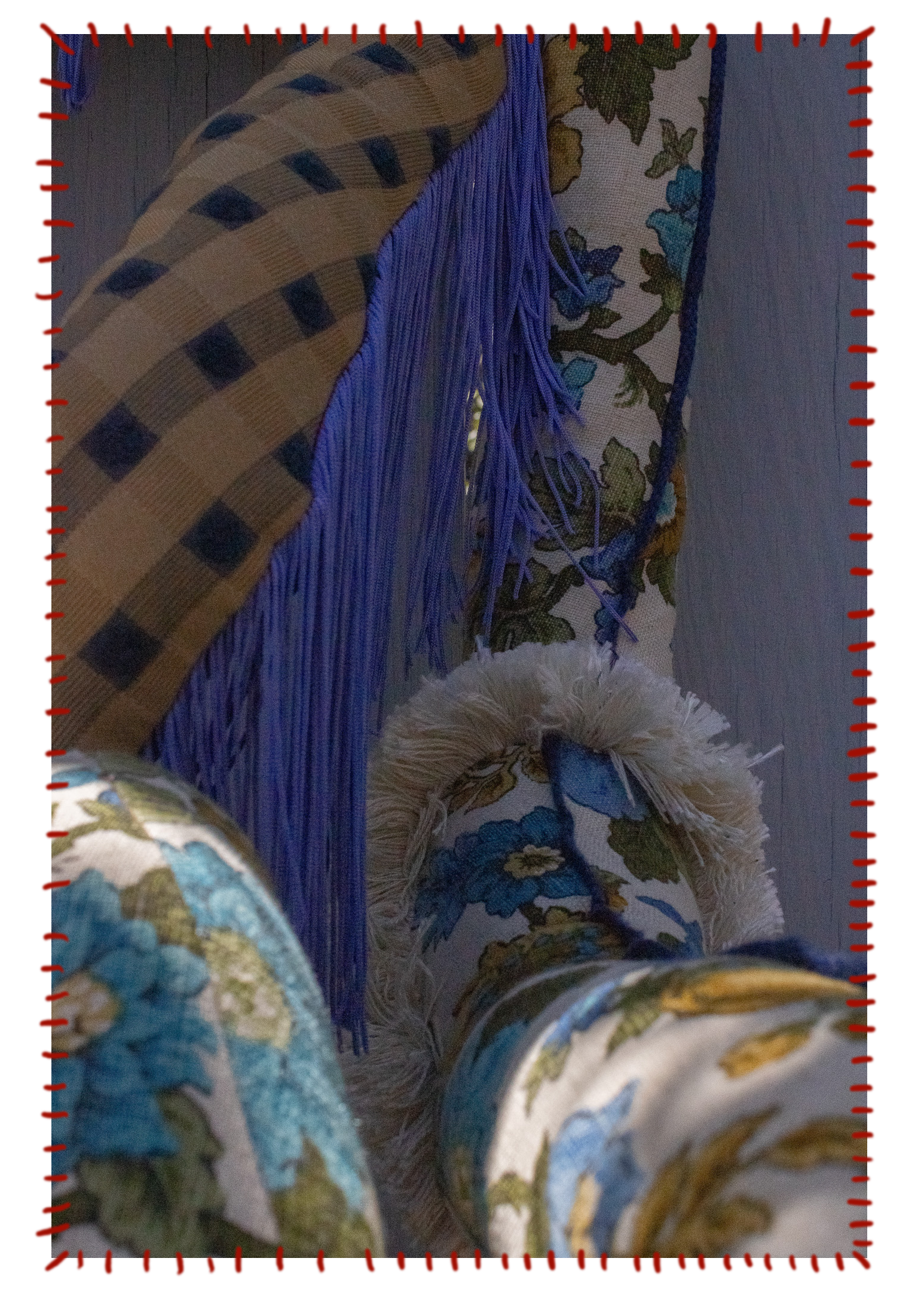
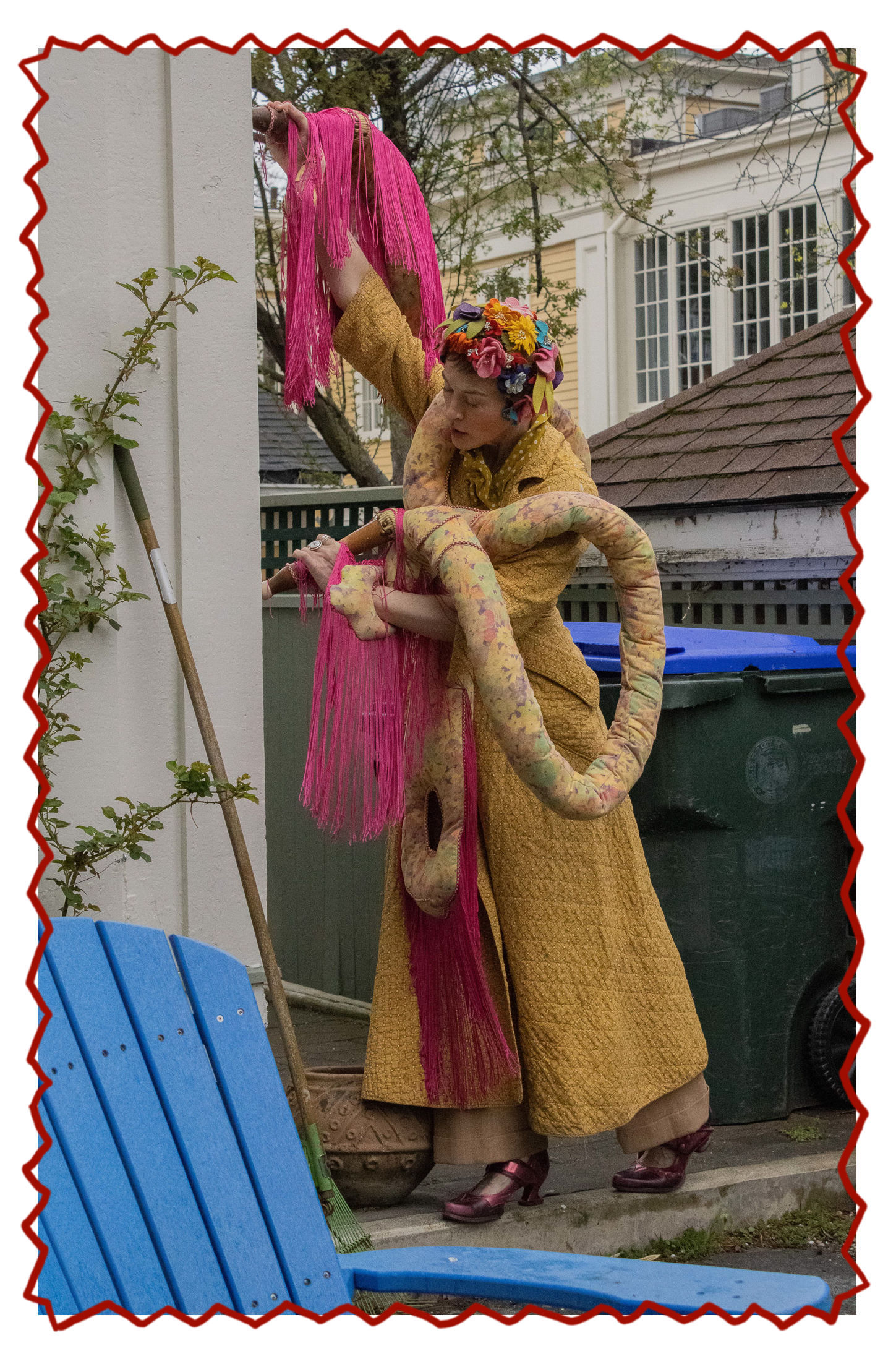
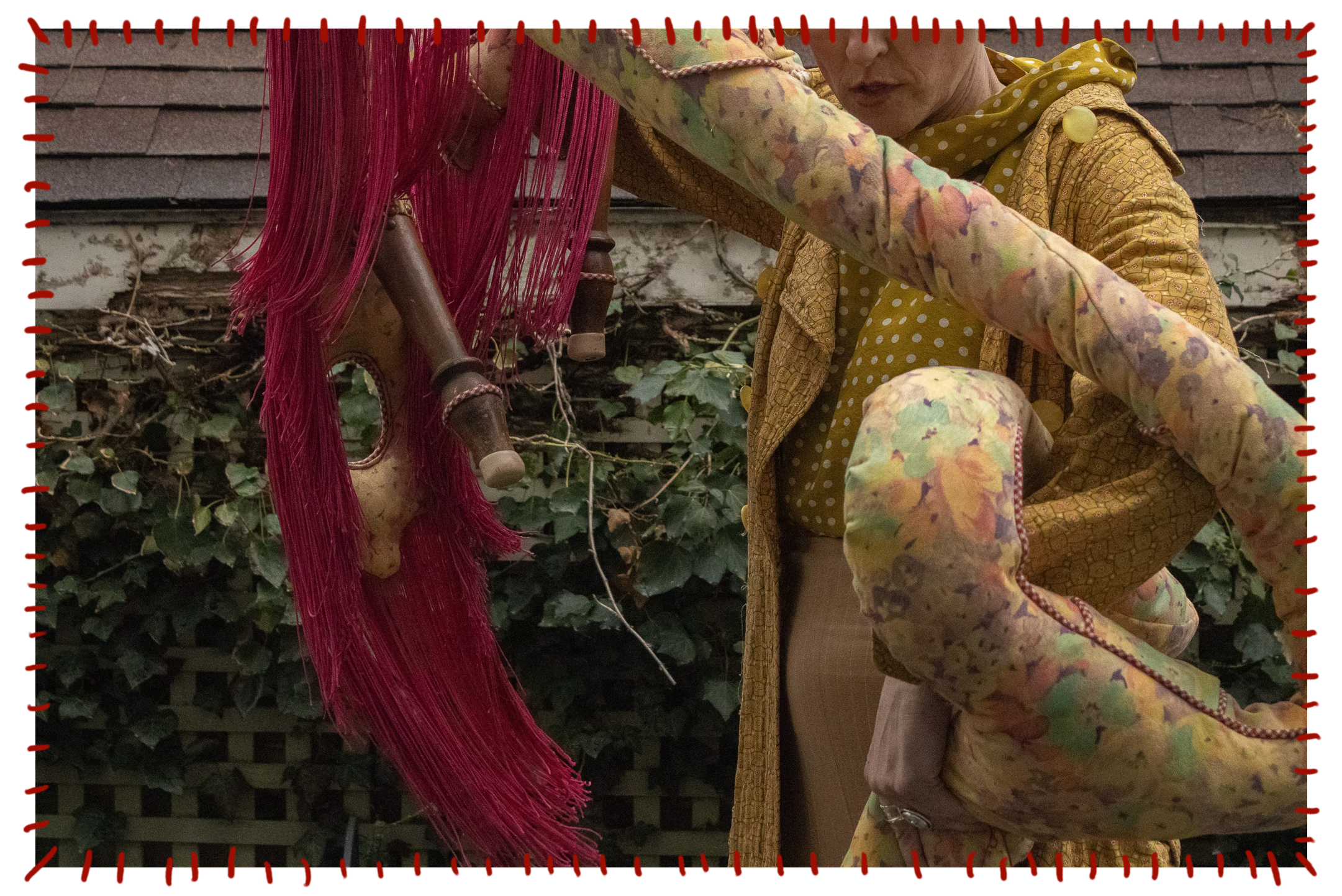
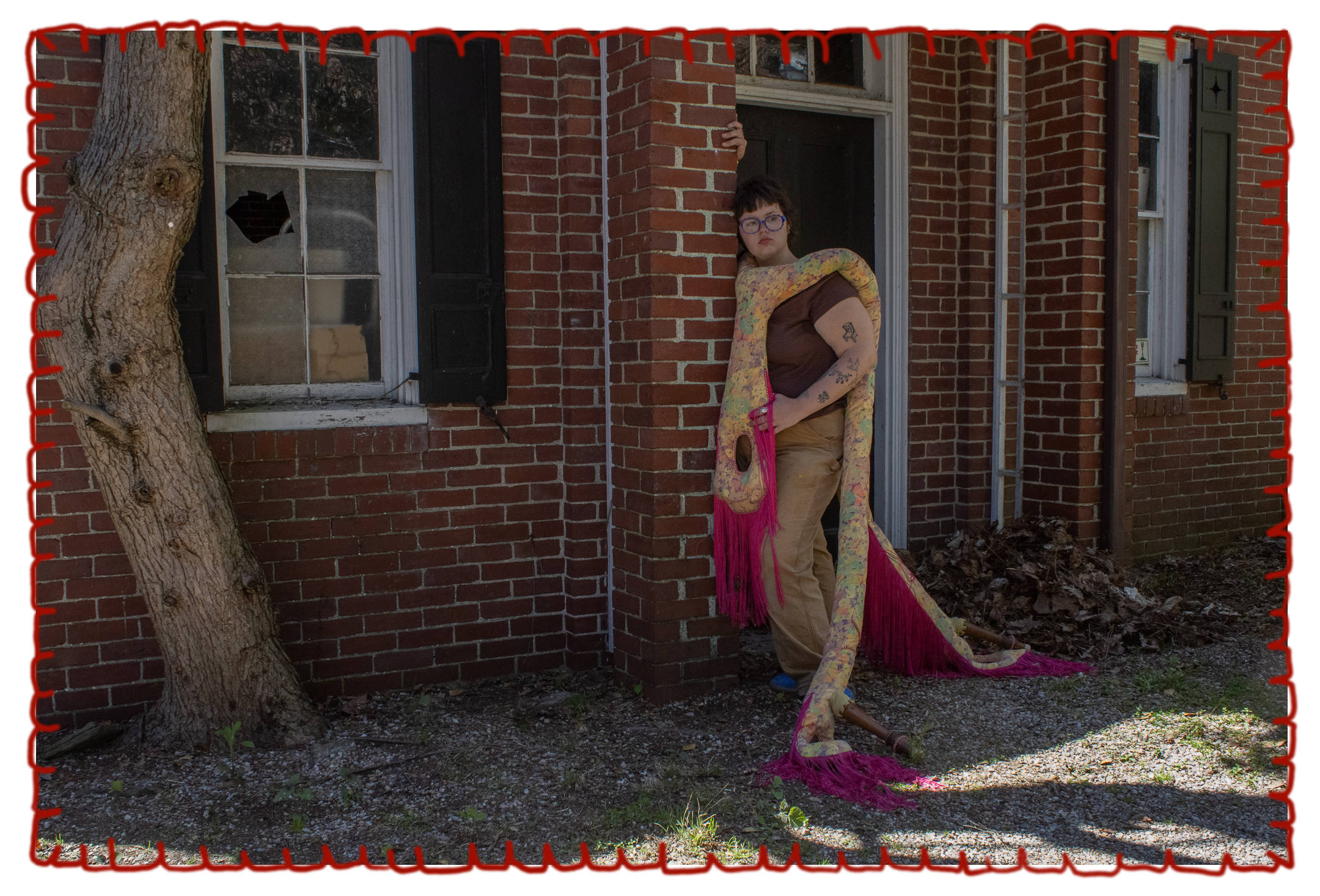
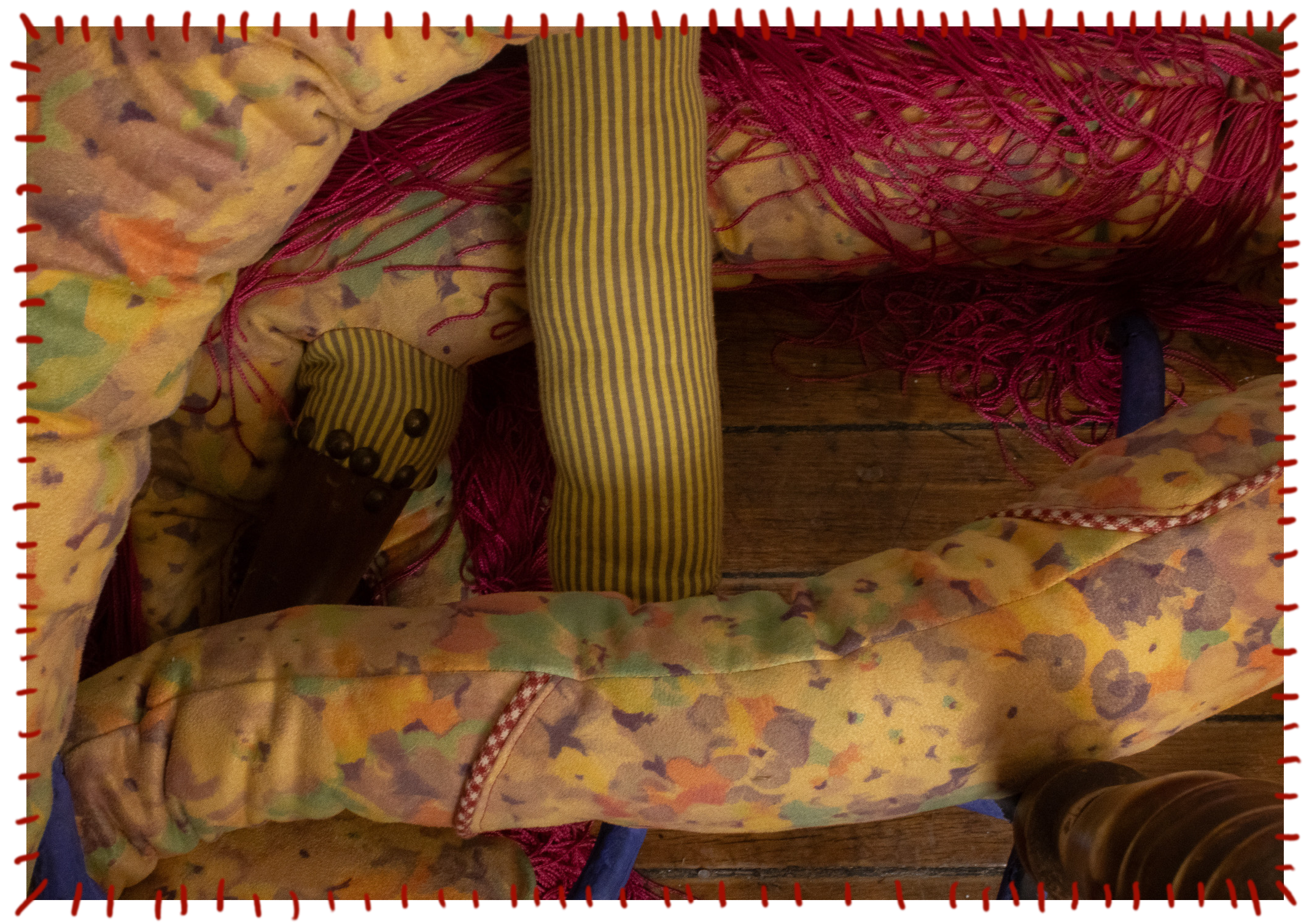
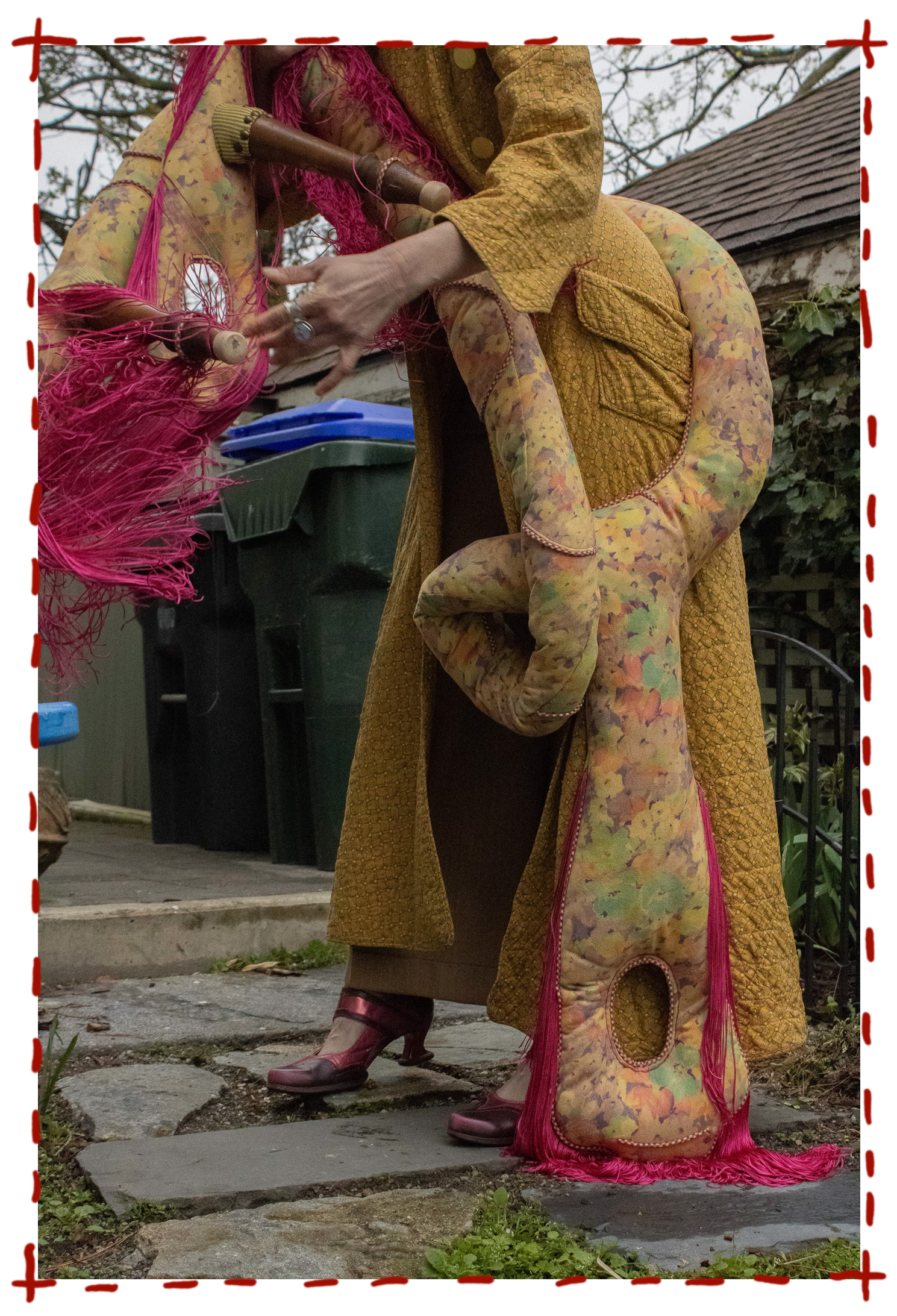
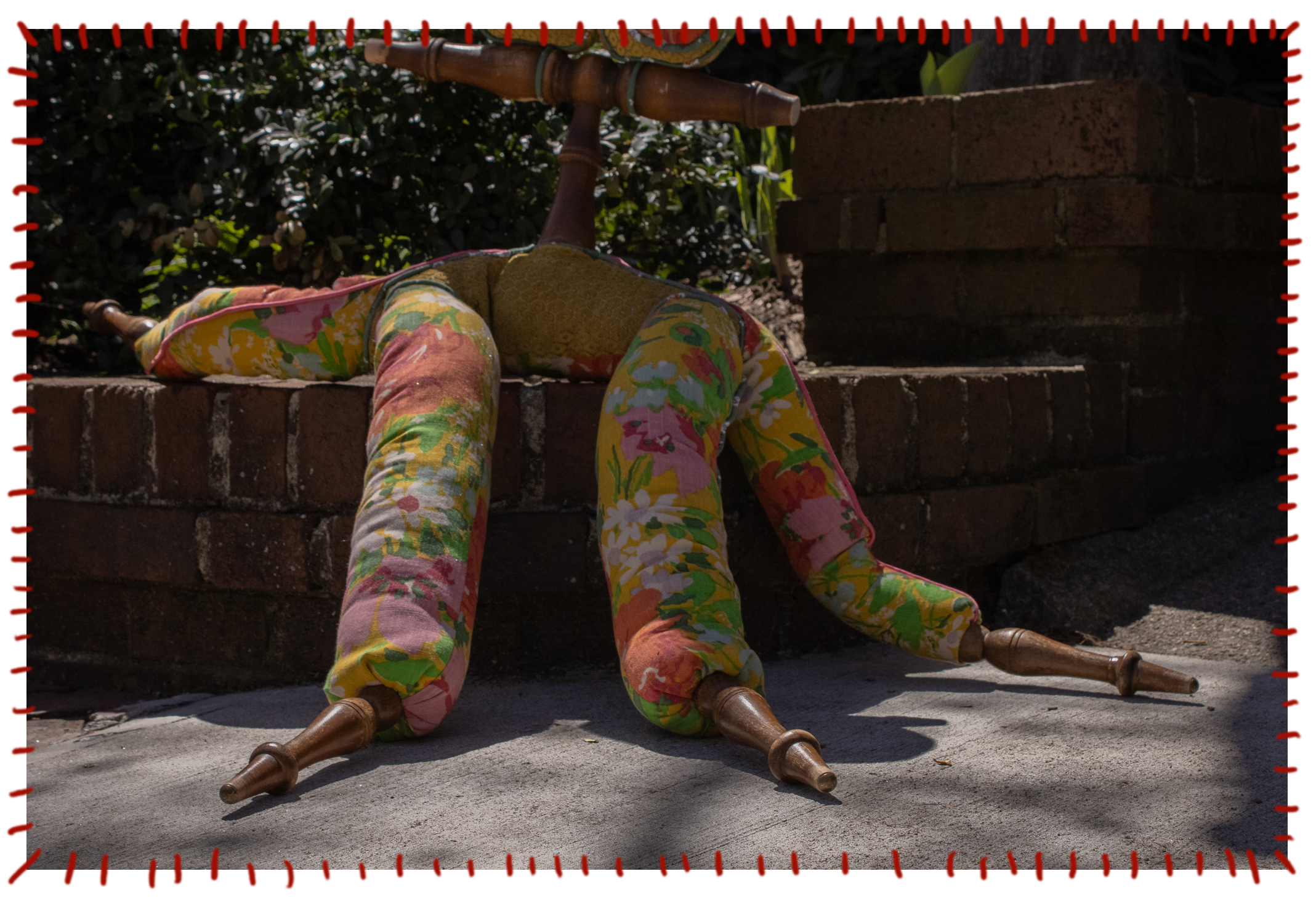
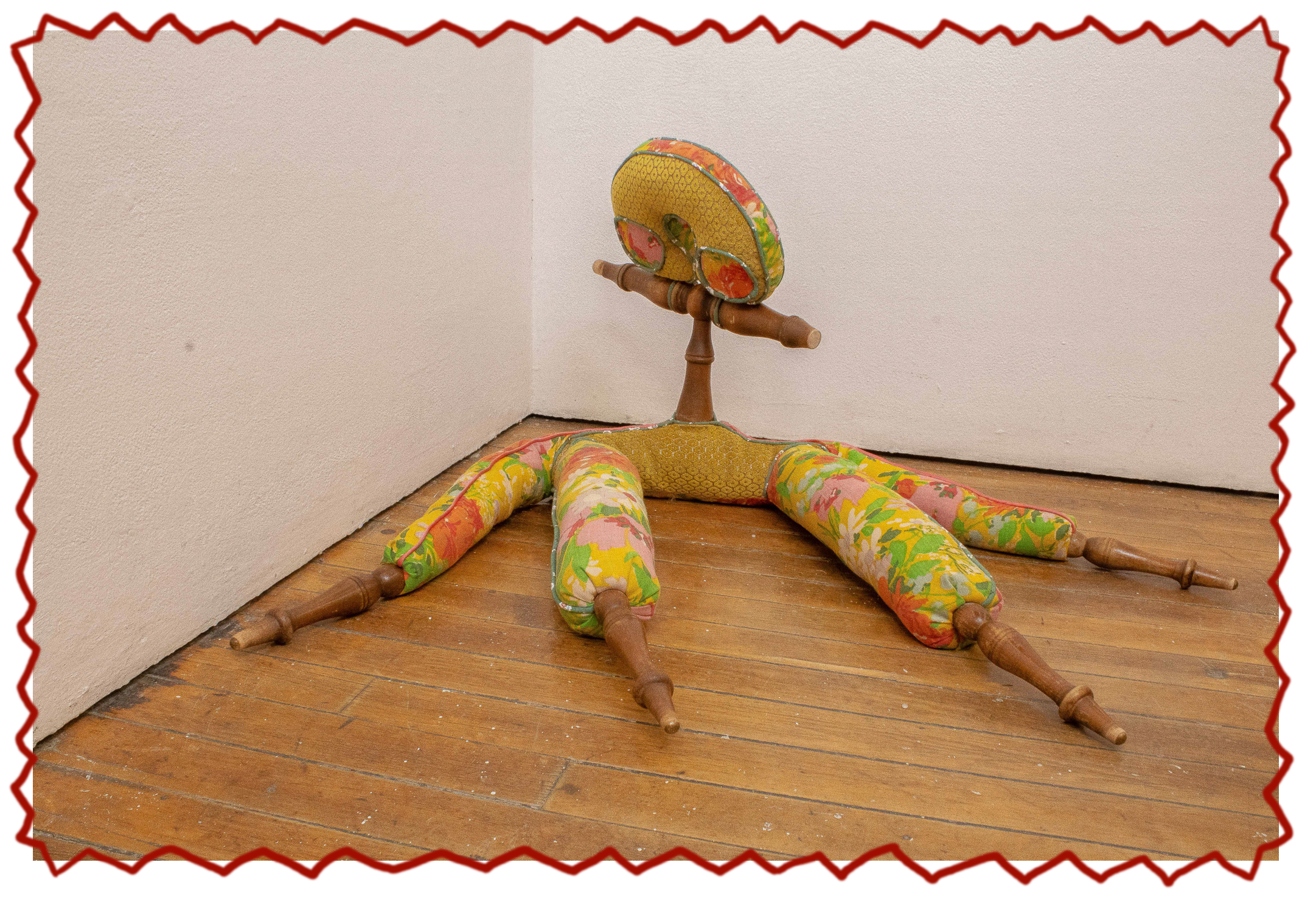
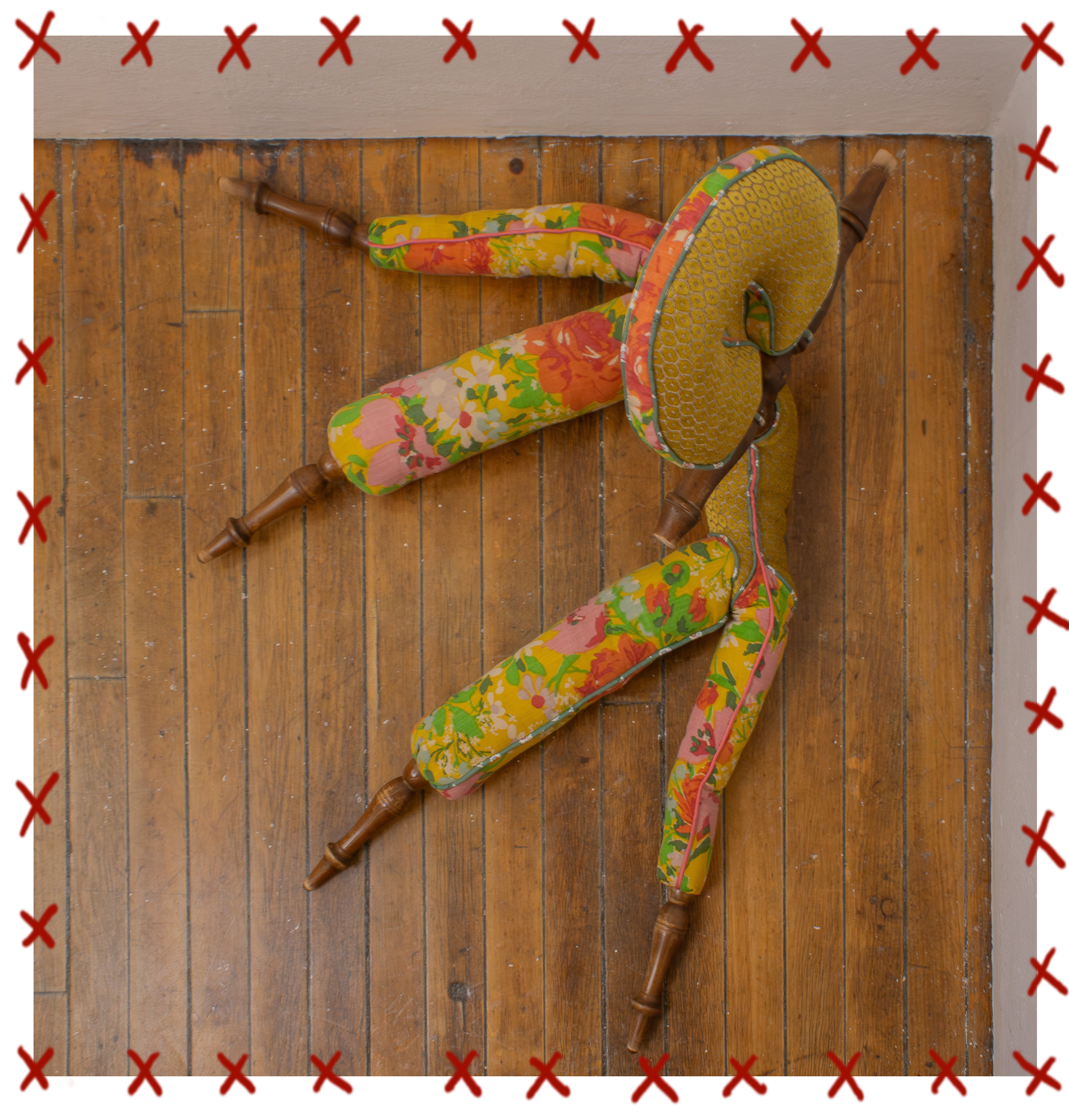
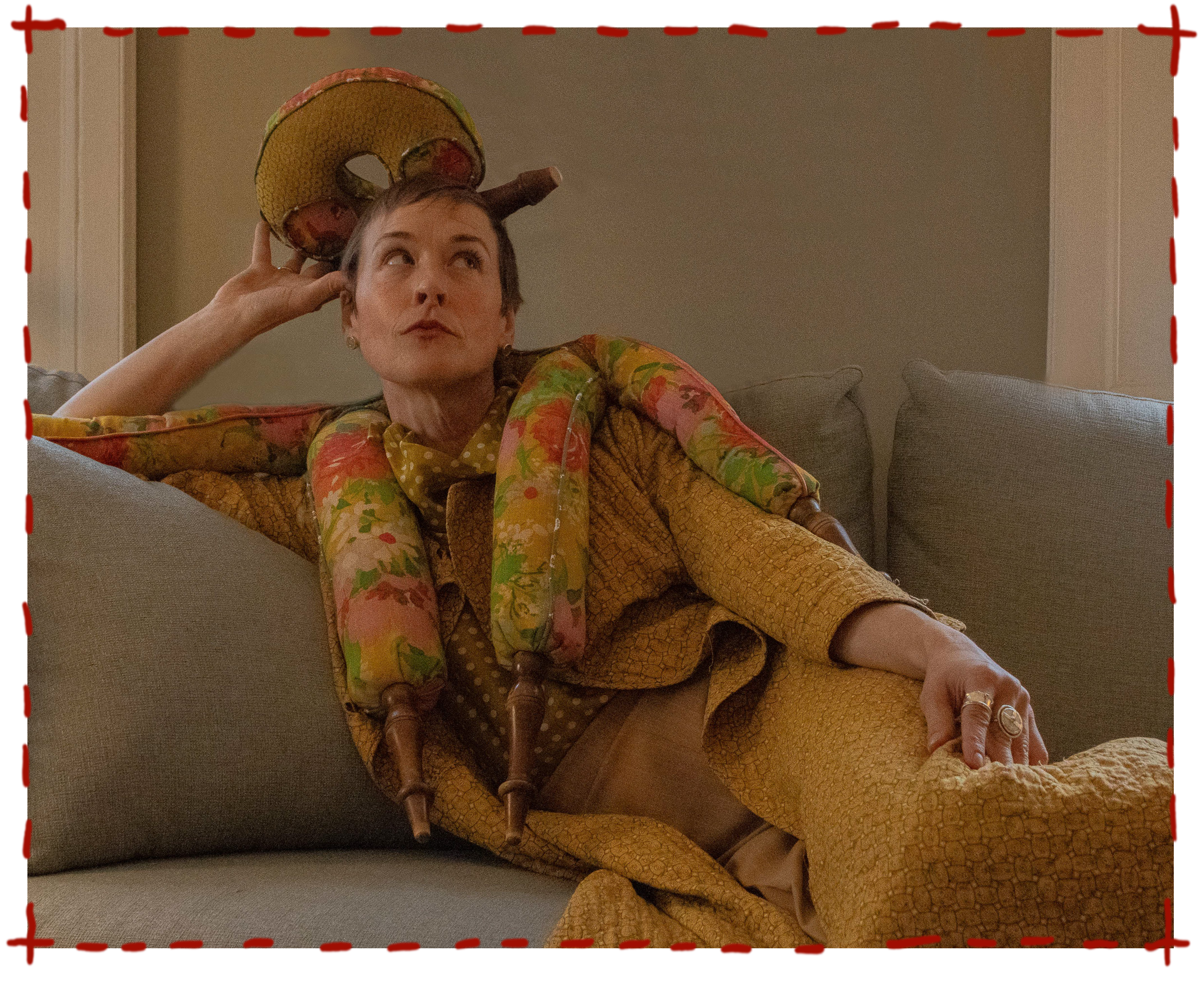
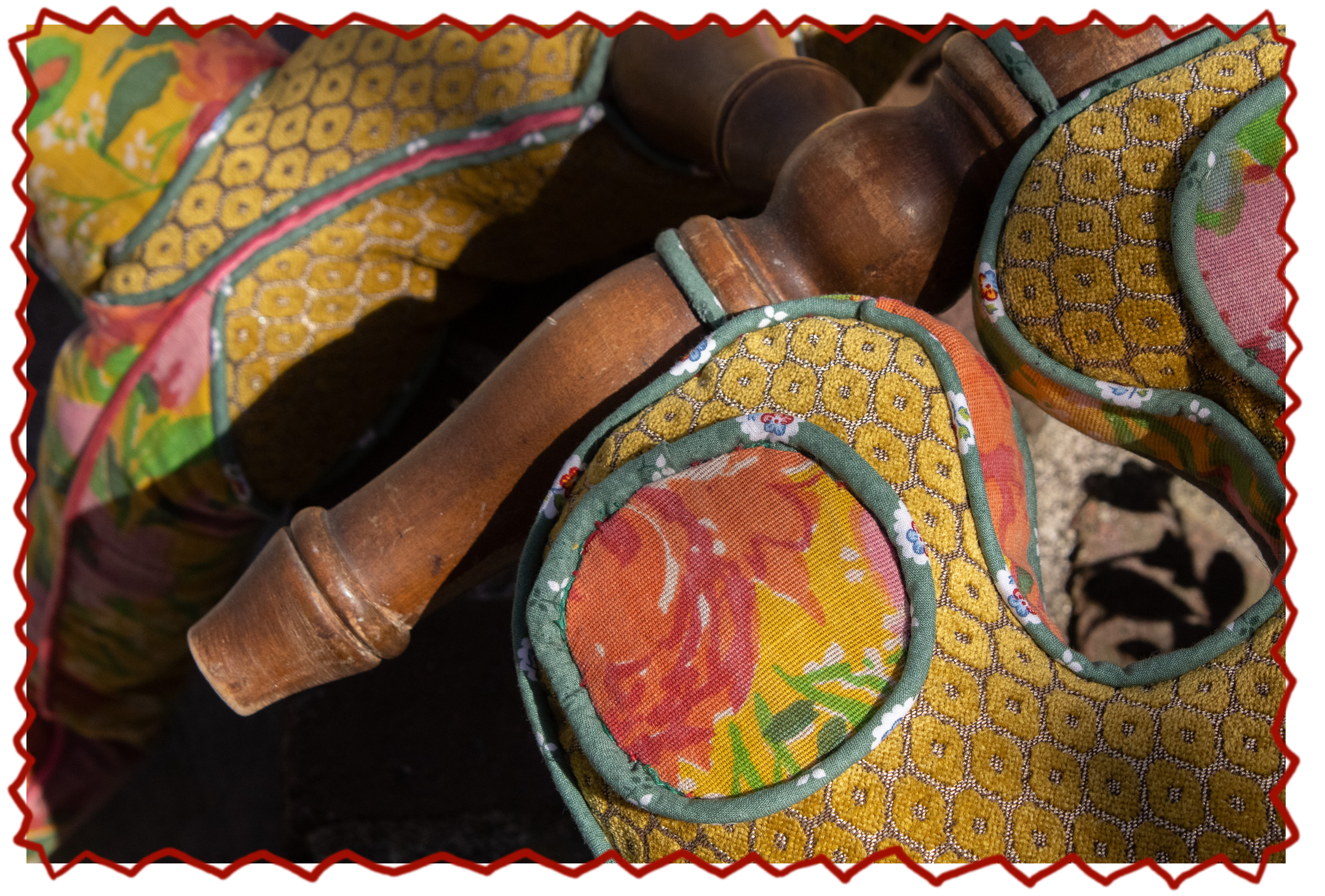
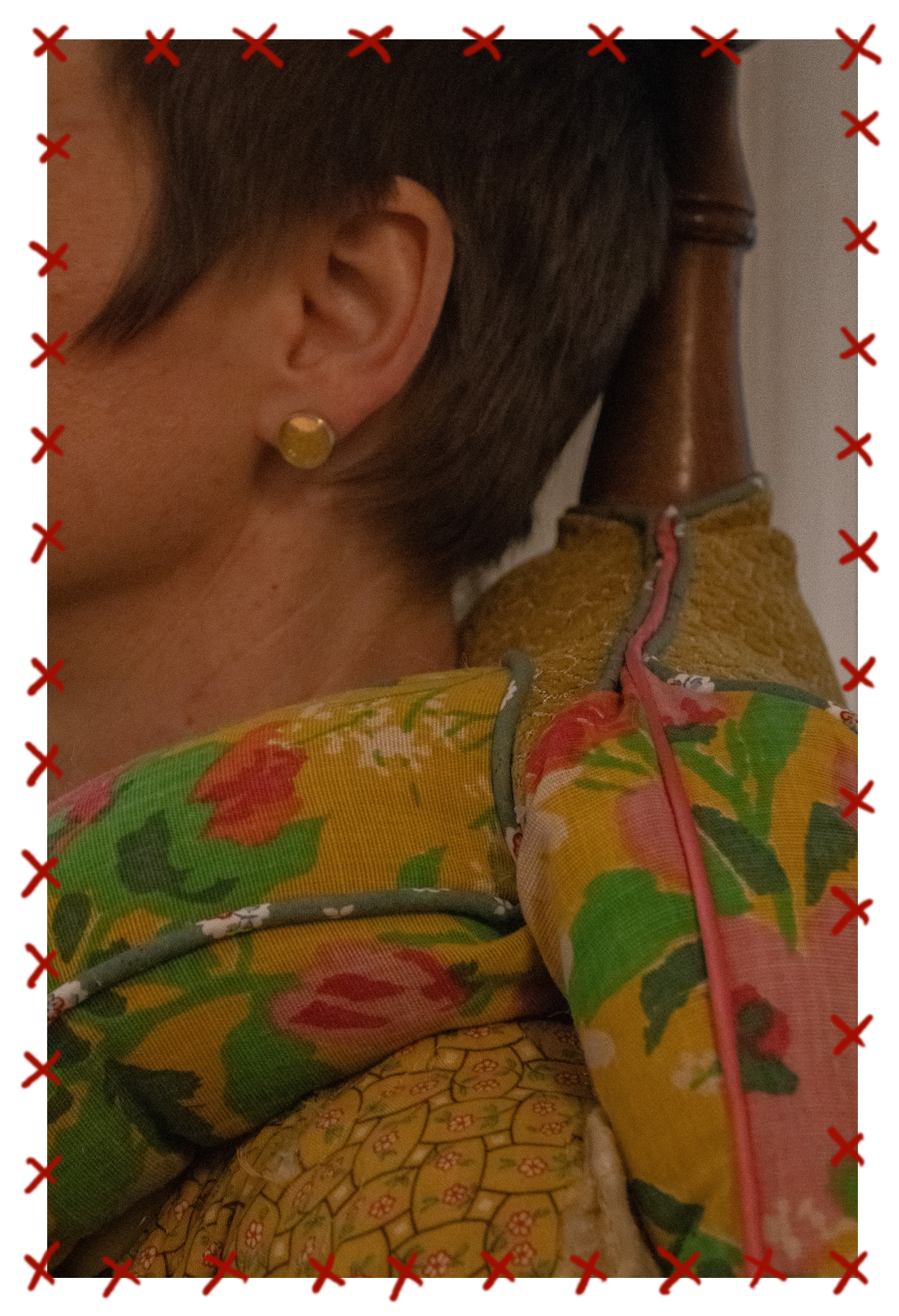
Soft upholstery is pulled taut around fractured wooden limbs, punctuated by preloved brass tacks & worn protective plastic chair socks. Red threads attempt to hold together what rigid joinery can no longer secure. Exposed seams exist next to obsessive stitching & piping. Chairing’s unruly pink fringe frames the ends of its face & paws; each system interrupts & relies on the others. Fabric from chair seats, torn upholstery, & fragments of wood are mended back together, not restoring the chair’s usability. Materials that were once discarded gain another life. Mending becomes a way of repairing the way we understand furniture itself. Cutting apart chair seats, reusing upholstery, & stitching fragments back together, I begin to loosen that relationship. Fragments become more bodily & unfamiliar. The chair shifts from a stable object into something closer to a thing. Tacks are pried from the rust ring on the fabric it settled into, stitches are cut, restitched, & reattached unabashedly.
Chairish
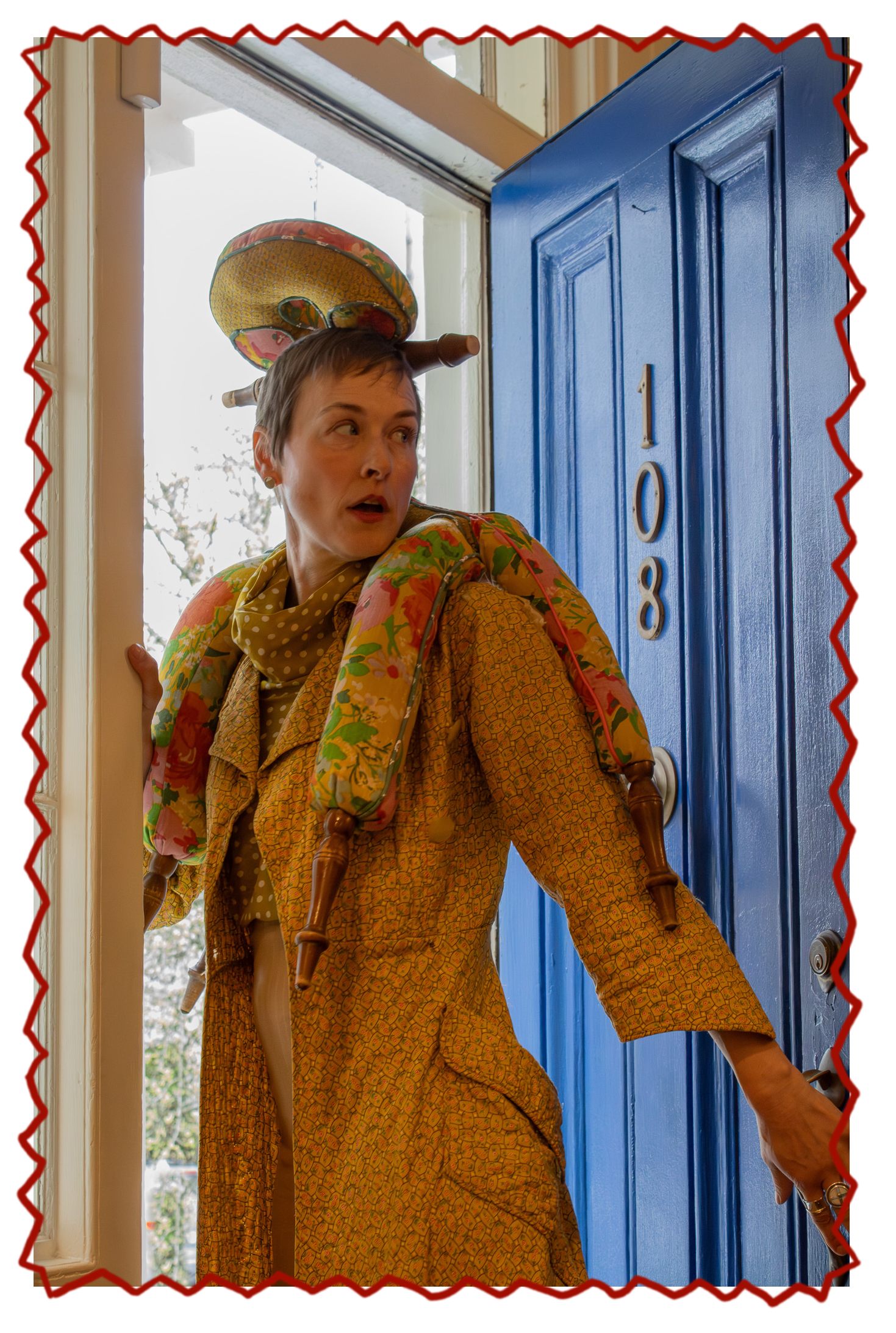
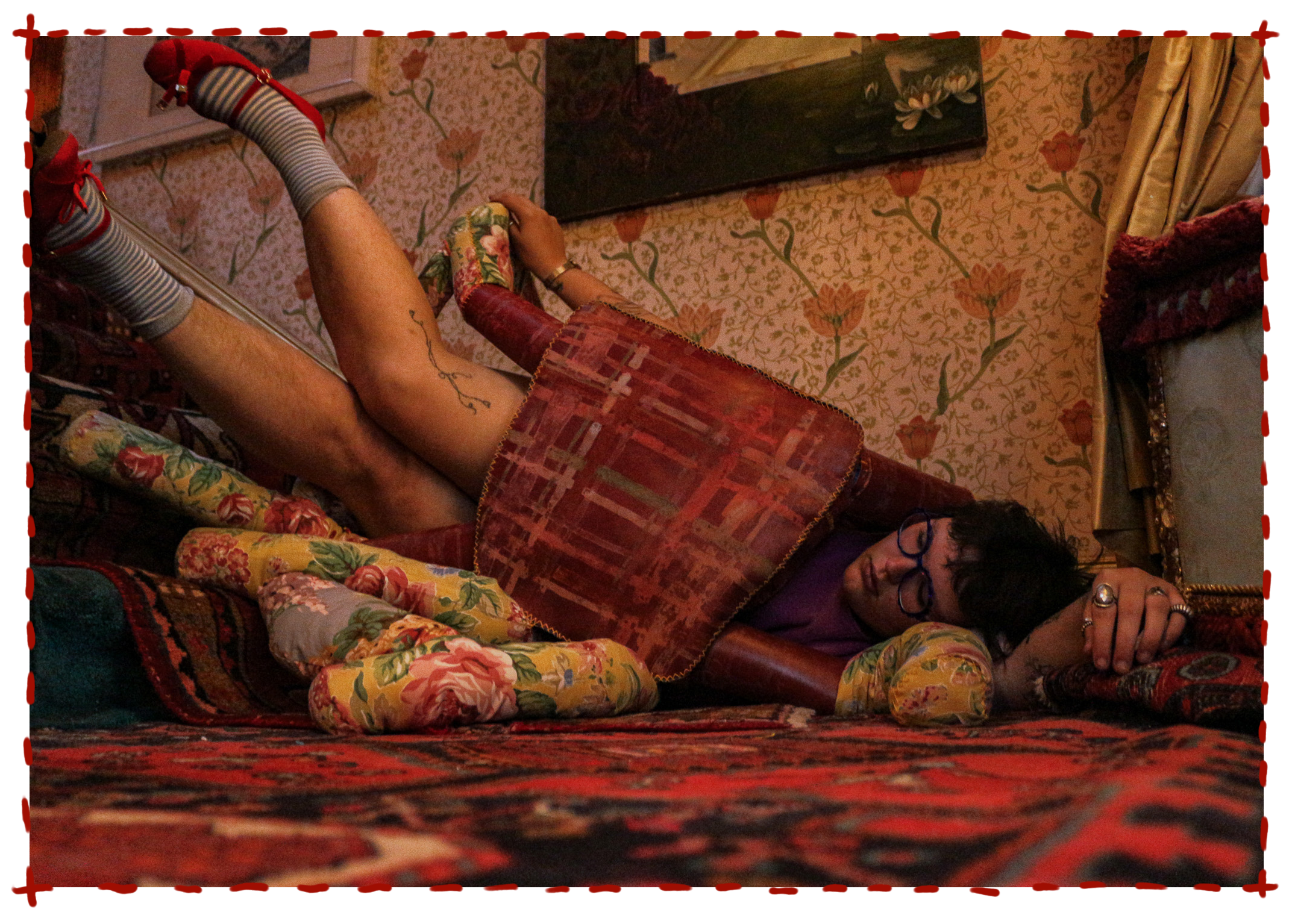
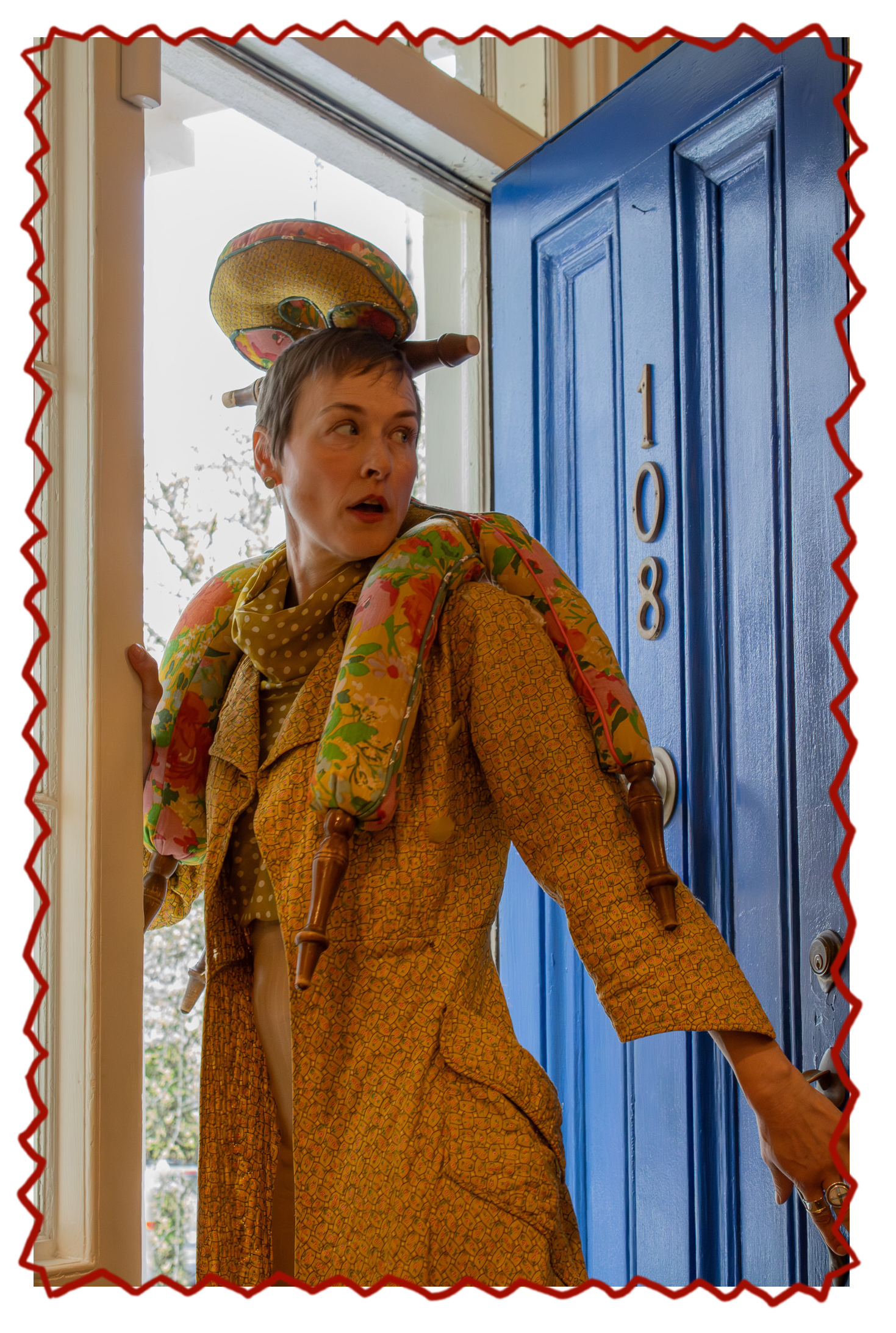
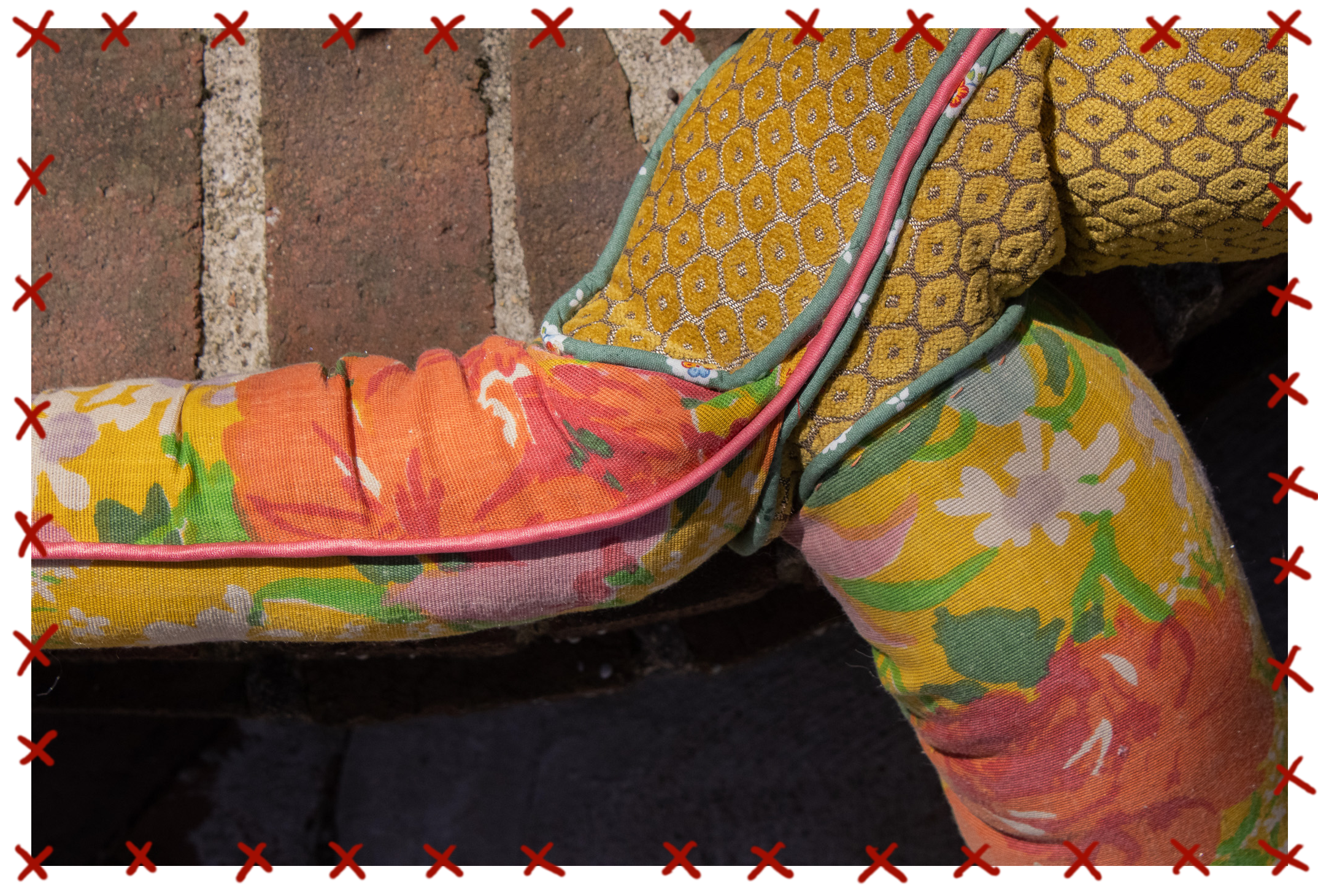
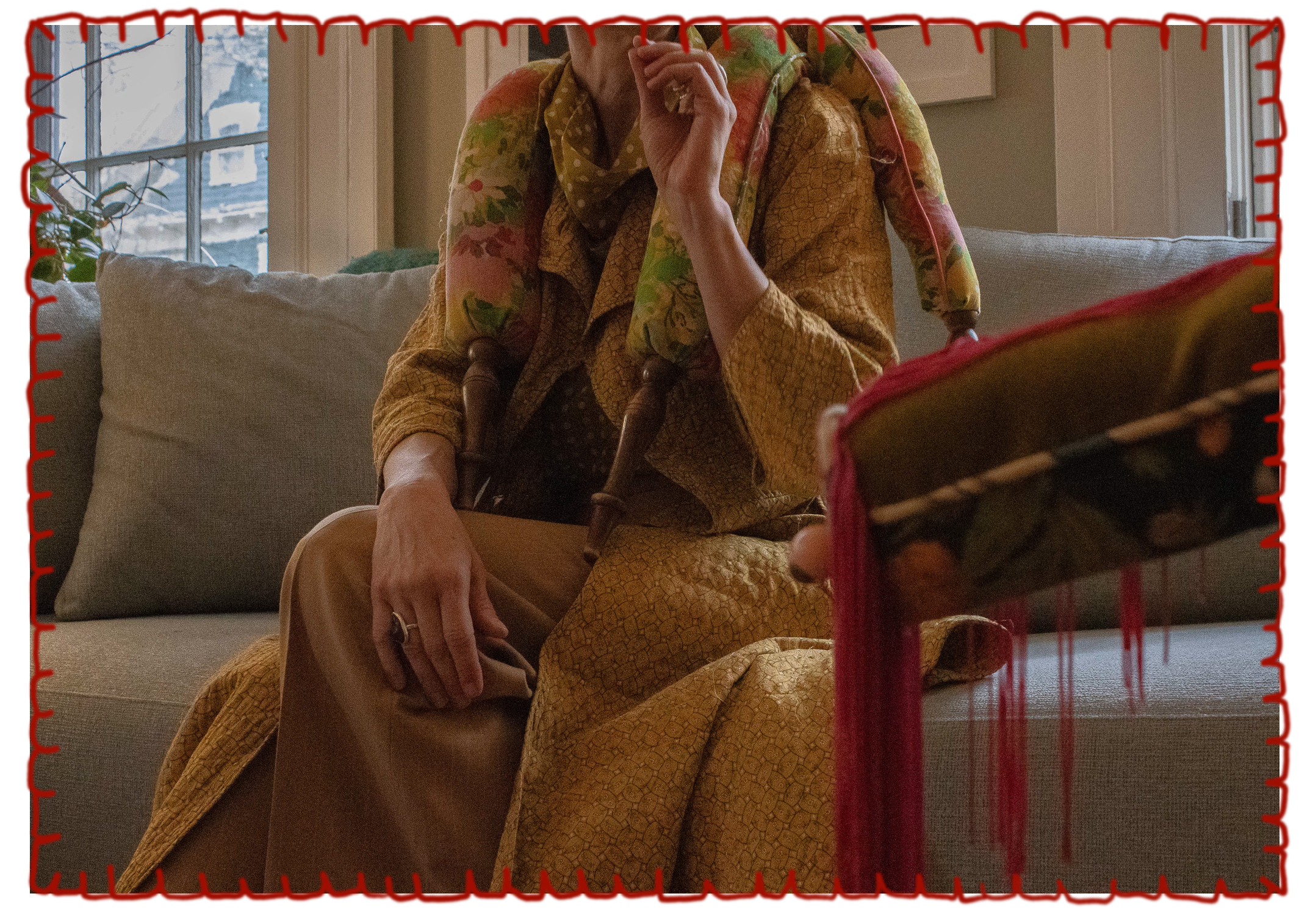
Linens of former pillows & curtains now form the hips and legs that cradle its wooden feet. Its seat settles across the curve of your shoulders, torso rests along the nape of your neck, cheeks peering above the top of your head, with legs nestled in the crooks of where your arms meet your chest. The chair offers no clear orientation for the body. It doesn’t guarantee rest or support, asking for hesitation, adjustment, negotiation. What was once an object that organized the body becomes something the body must learn to move with differently. The chair becomes a body assembled through effort. Using the chair as material foregrounds time. Most domestic chairs outlive the contexts in which they were produced. Damage and use become part of what the chair is through care. To care for a material is to refuse its erasure. Repair introduces a second layer of time into the object. Every moment of intervention thickens the object's history.
Through this idea of mending, the chair moves closer to what could be called ‘thingness’, its history of use & repair exceeds any category that could contain it. This shift is unstable; the chair does not remain a thing, just as it does not remain an object. Mending keeps the chair in process, holding together what has already begun to come apart. By disassembling & reconfiguring parts, I mend the perception of chair from fixed categories of object or thing. Oscillating between. It no longer performs its designated role, yet it retains an unmistakable aura of “chairness,” a residual category that cannot be fully inhabited. Viewers recognize the materials even when the form has collapsed. The chair offers no clear orientation for the body. It does not guarantee rest or support, asking for hesitation, adjustment, negotiation. What was once an object that organized the body becomes something the body must learn to move with differently. The chair becomes a body assembled through effort.
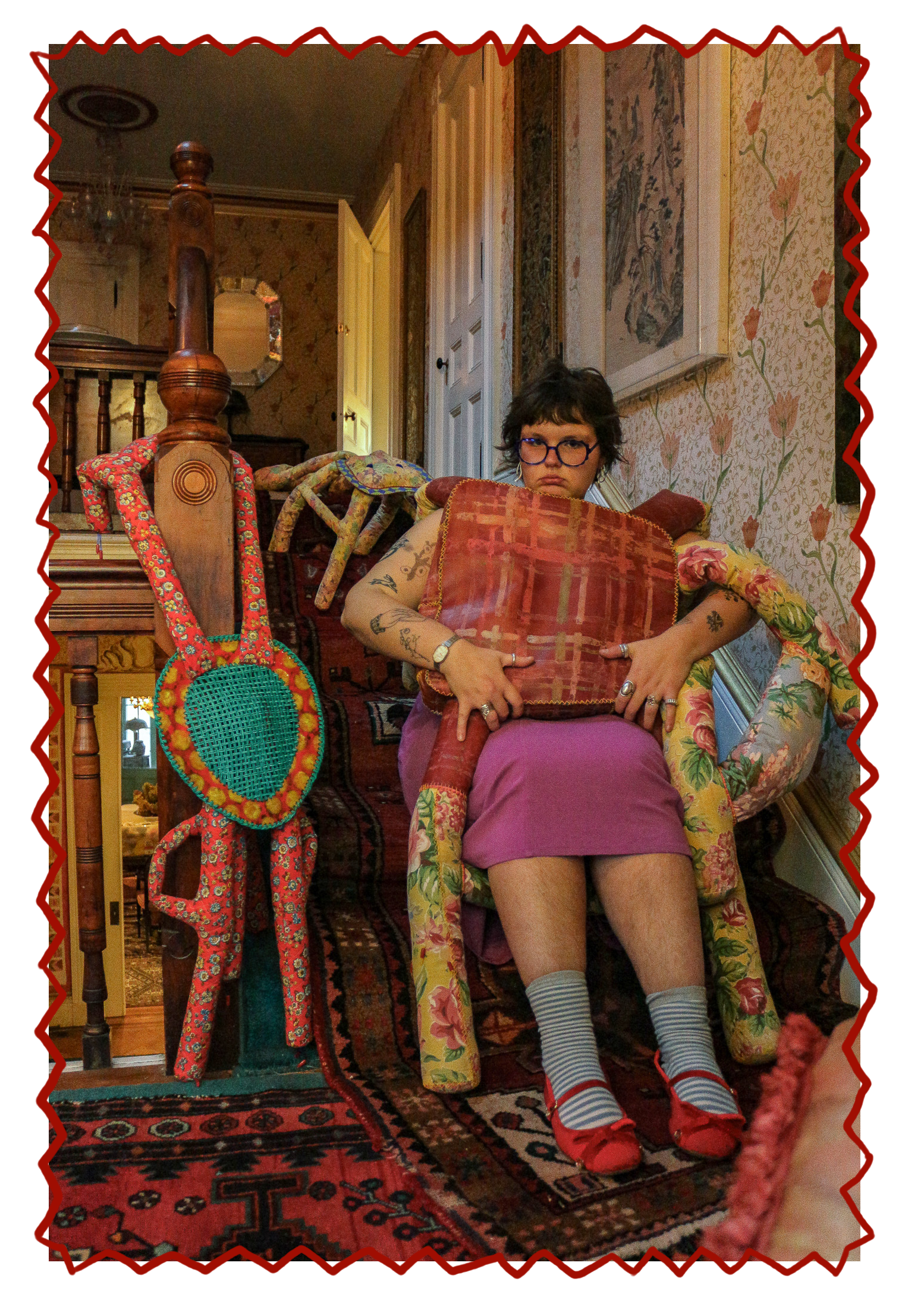
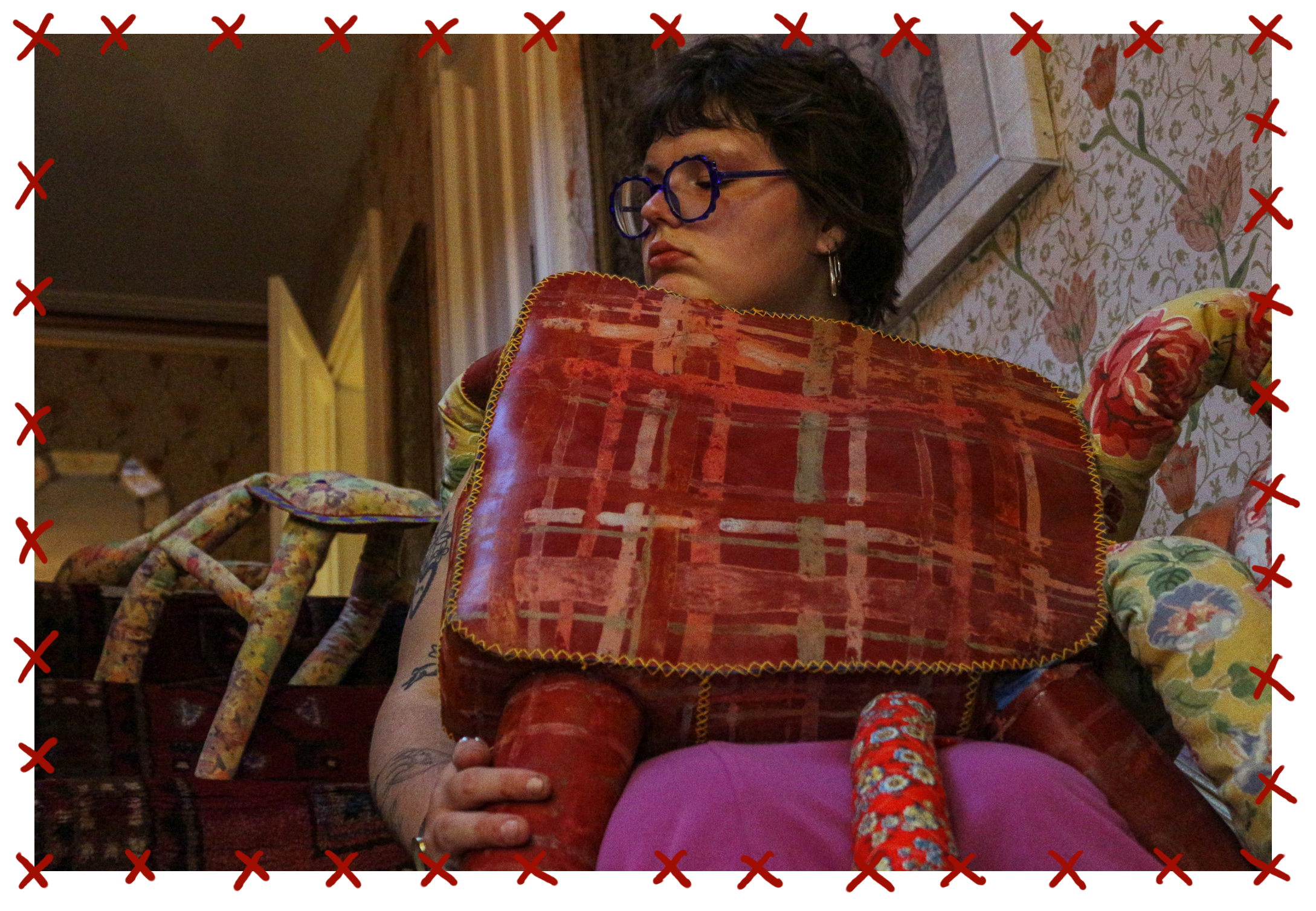

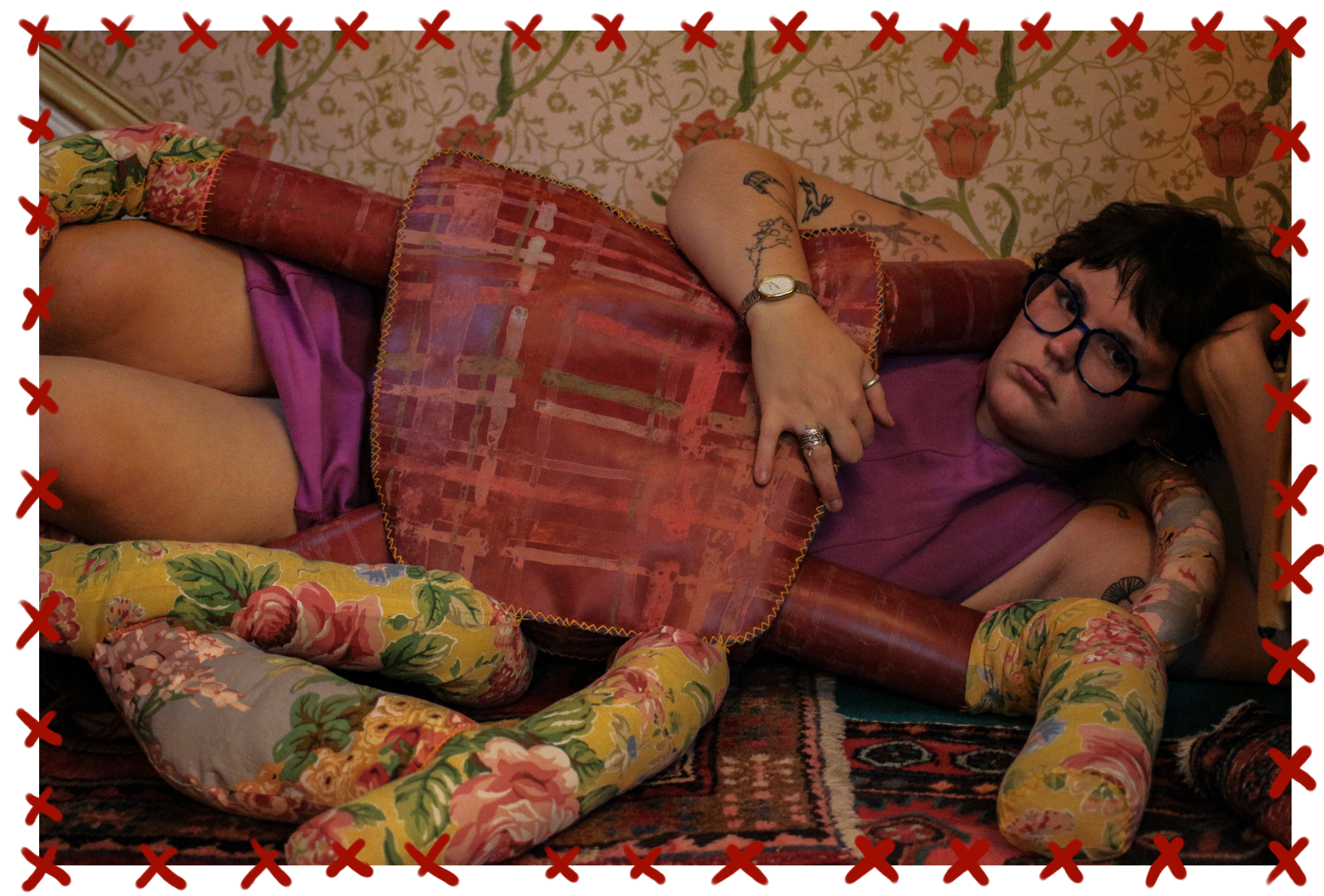
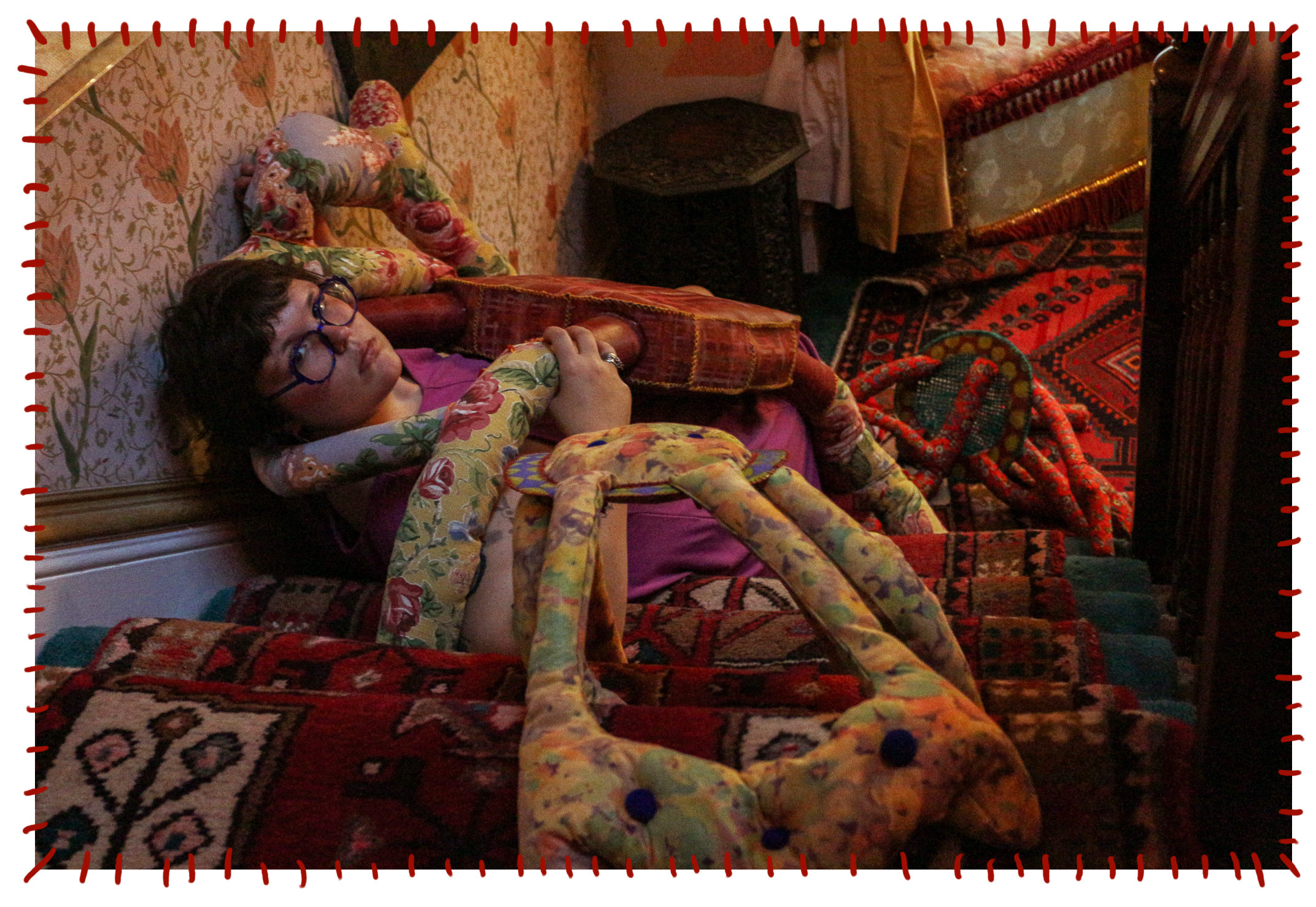
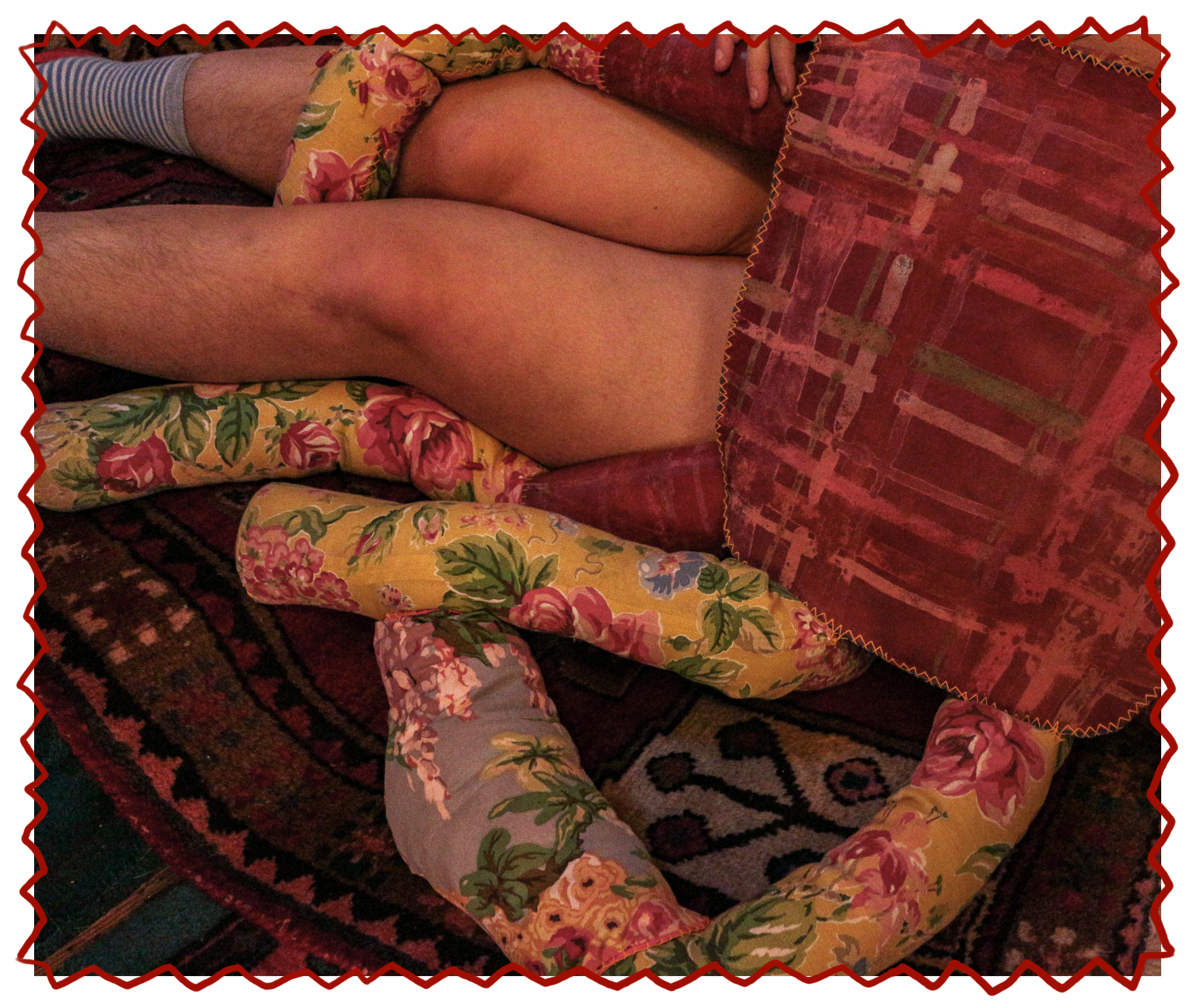
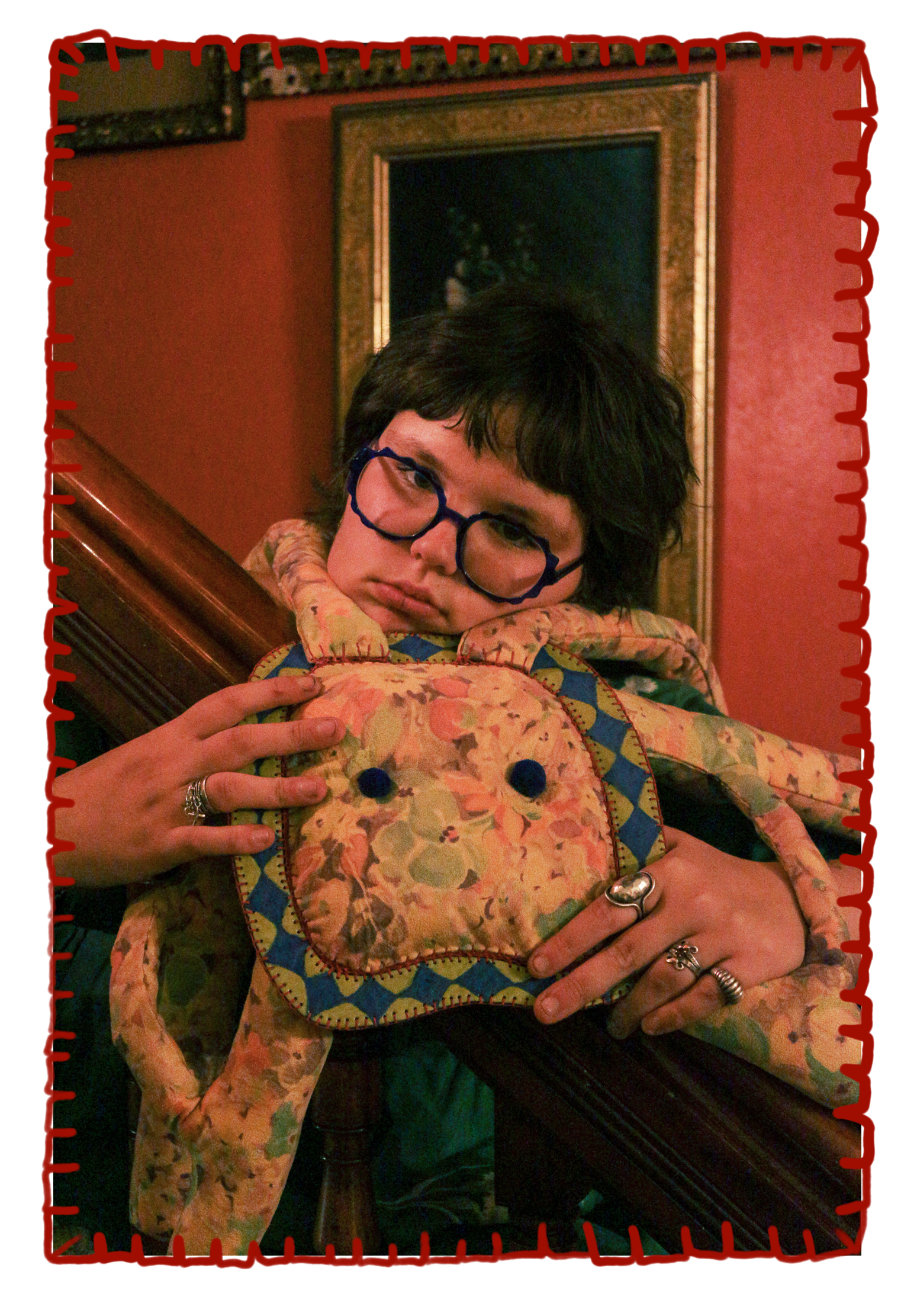
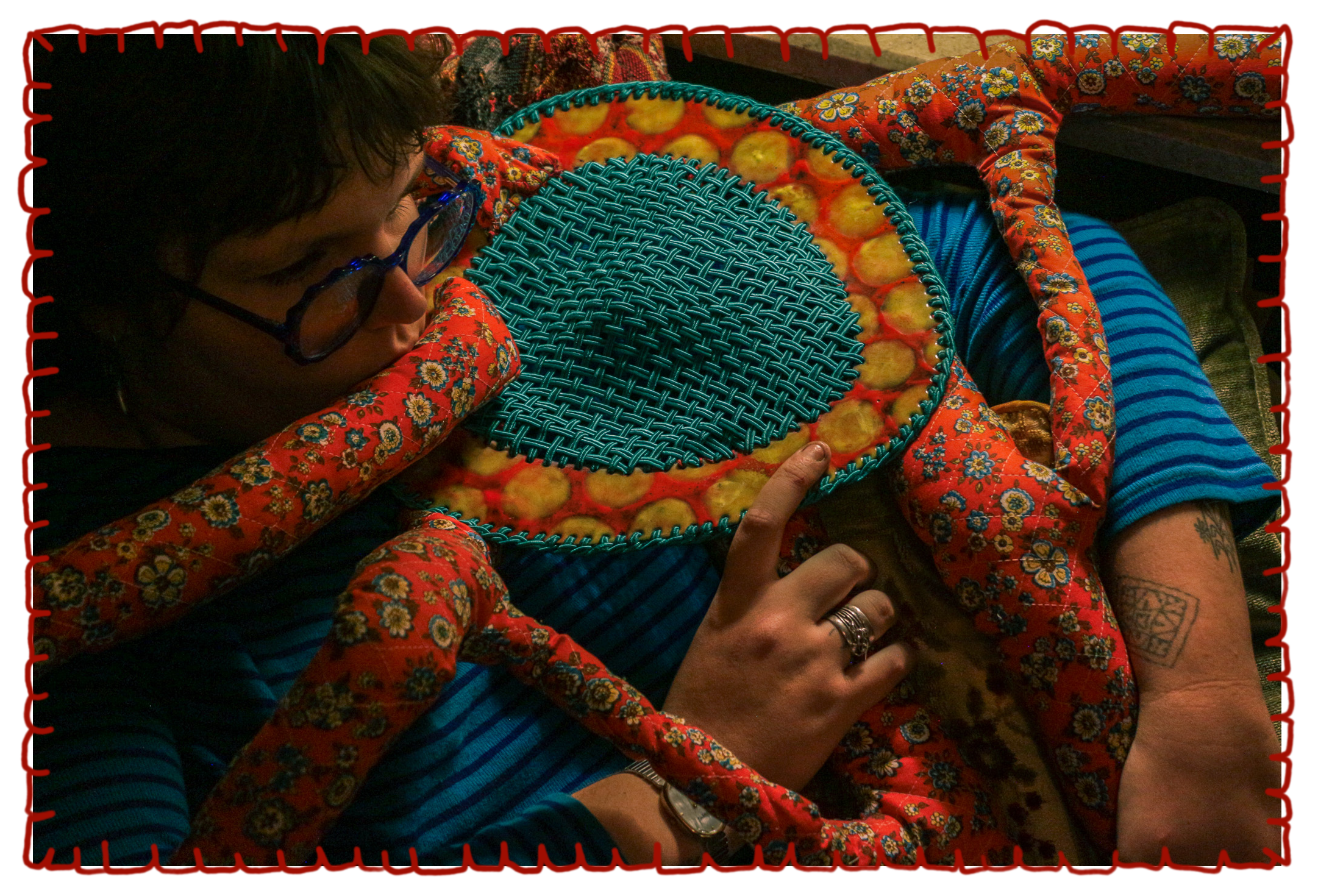
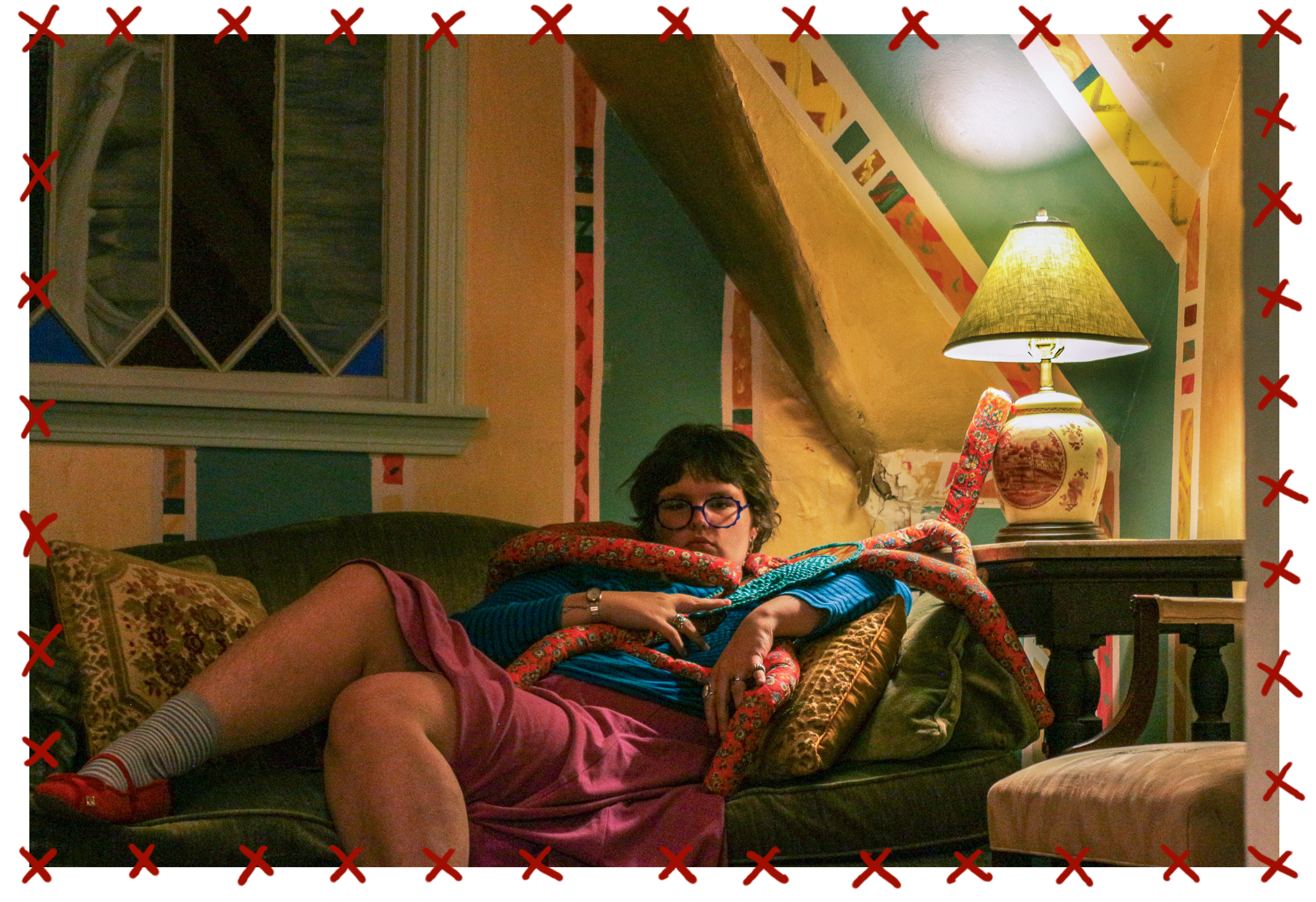
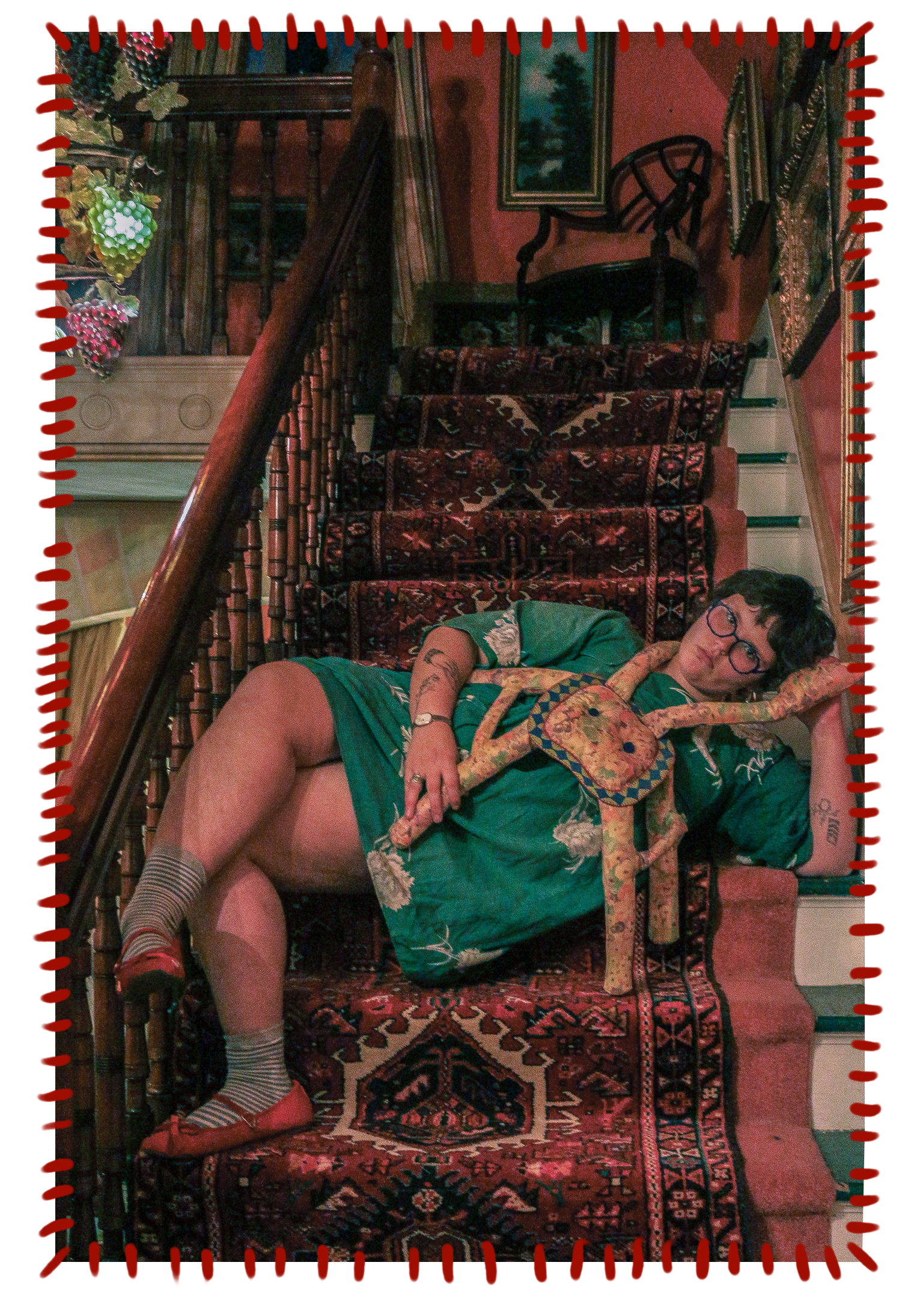
Passed down fabrics and trimmings, wooden chair parts, red thread, foam, beans, polyfil, sand, blue tape
2026.